// guides · 95 articles
Guides
Original, hands on guides from the Axiomi editors: comparisons, “best tool for the job” roundups and plain English explainers.
How to · 10 min readListen
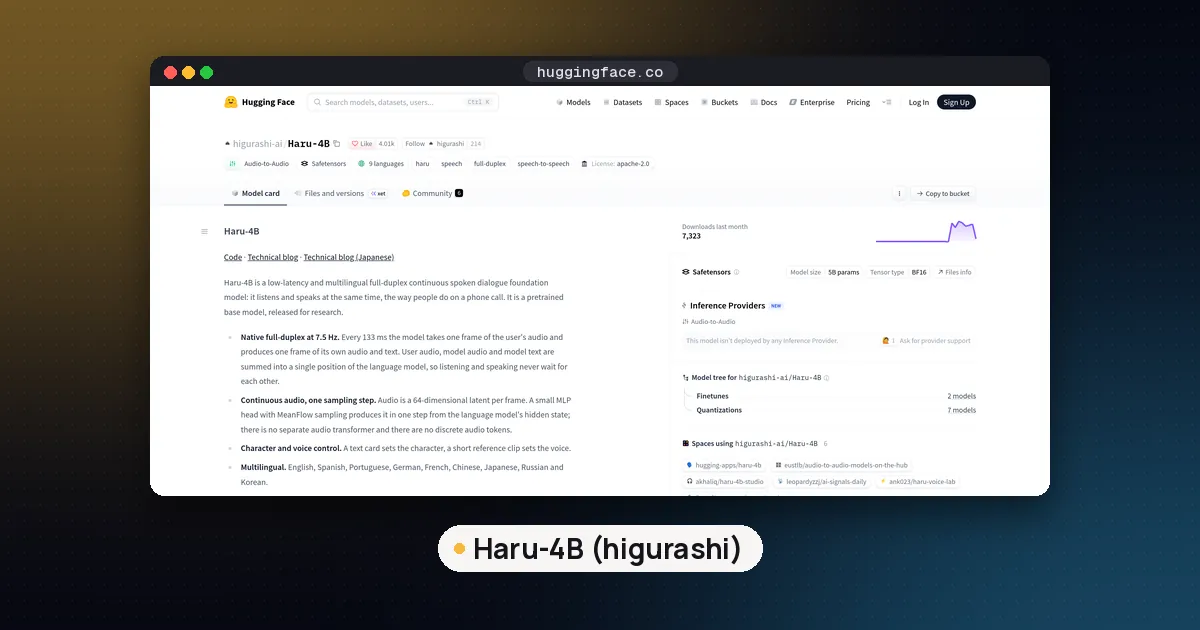
How to Run Haru-4B Locally
How to run Haru-4B locally: the full duplex voice model on an NVIDIA GPU, the Mac app, vLLM-Omni or speech.cpp GGUF files, with memory needs and limits.
Best of · 10 min readListen
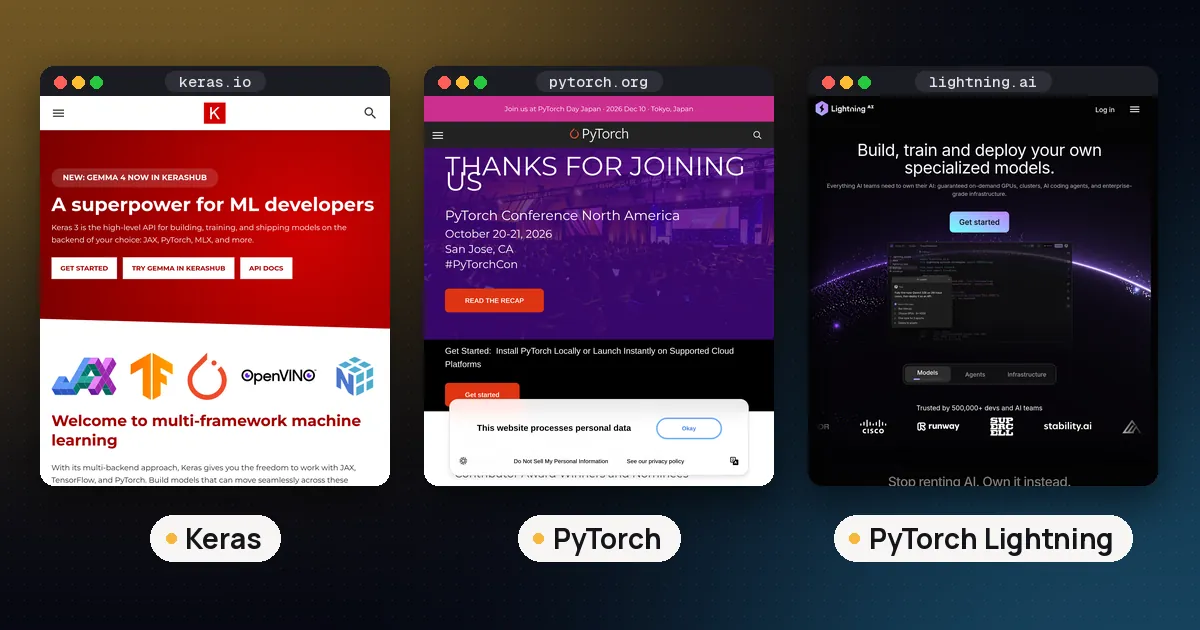
Best Keras Alternatives in 2026
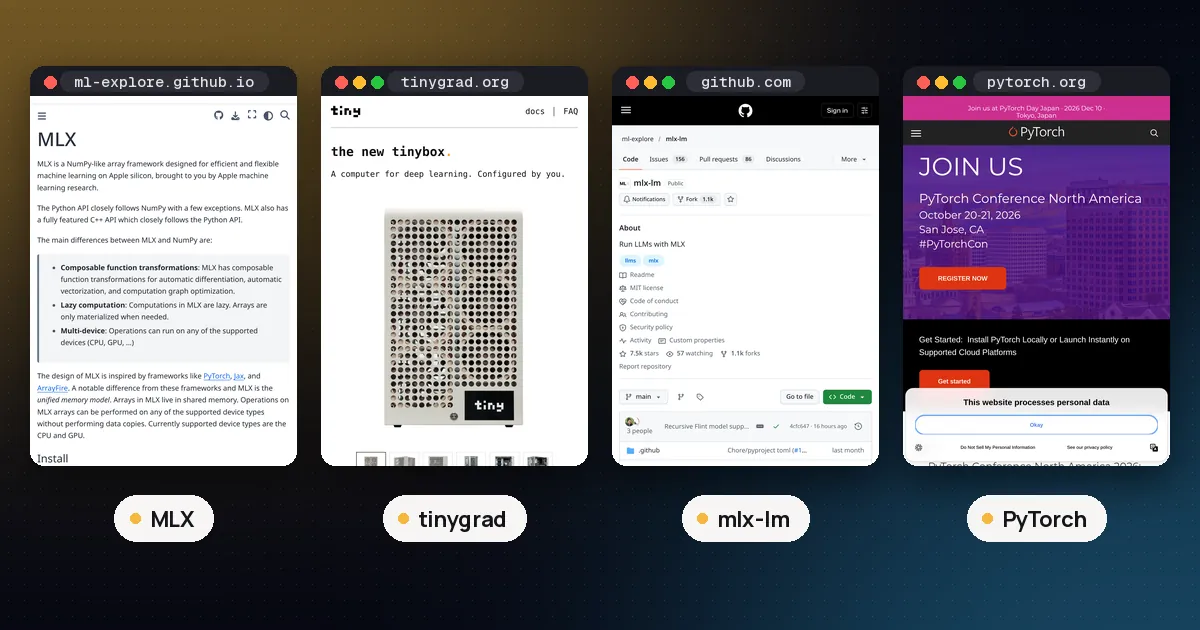
The best alternatives to Keras in 2026: PyTorch, Lightning, JAX with Flax, MLX, tinygrad and scikit-learn, with a tested code port and who should stay.
How to · 10 min readListen
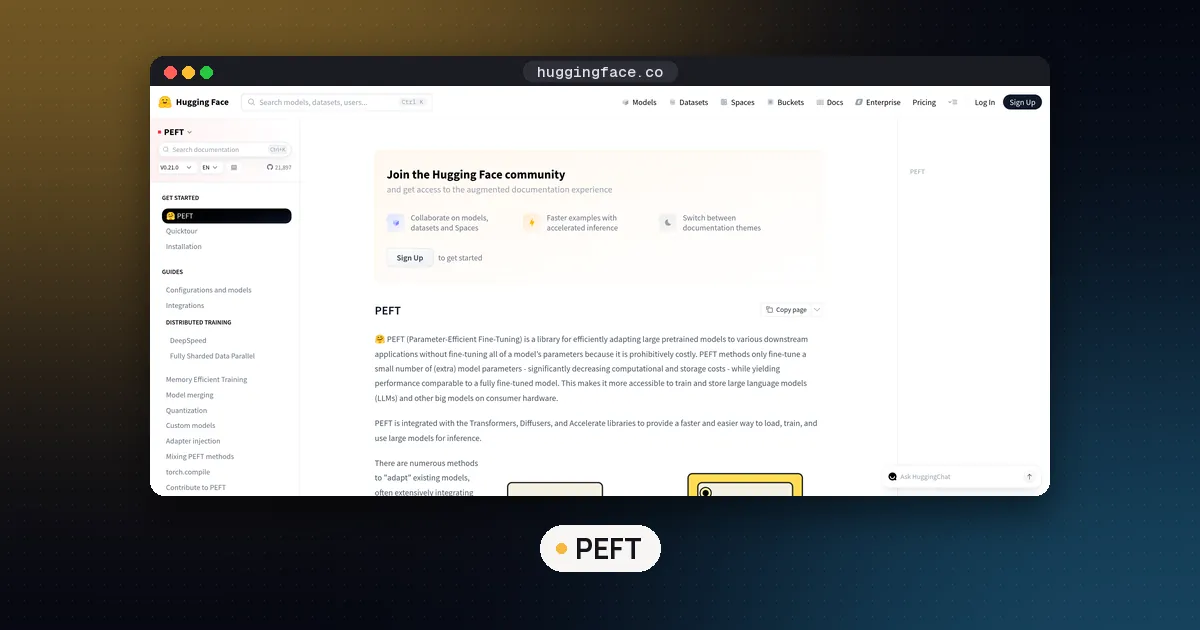
How to Fine Tune an LLM Without a GPU
How to fine tune an LLM without a GPU, with our CPU test numbers for 135M and 0.5B models, LoRA settings that fit in RAM, and when a Mac or free notebook is better.
· updated
Explainers · 10 min readListen
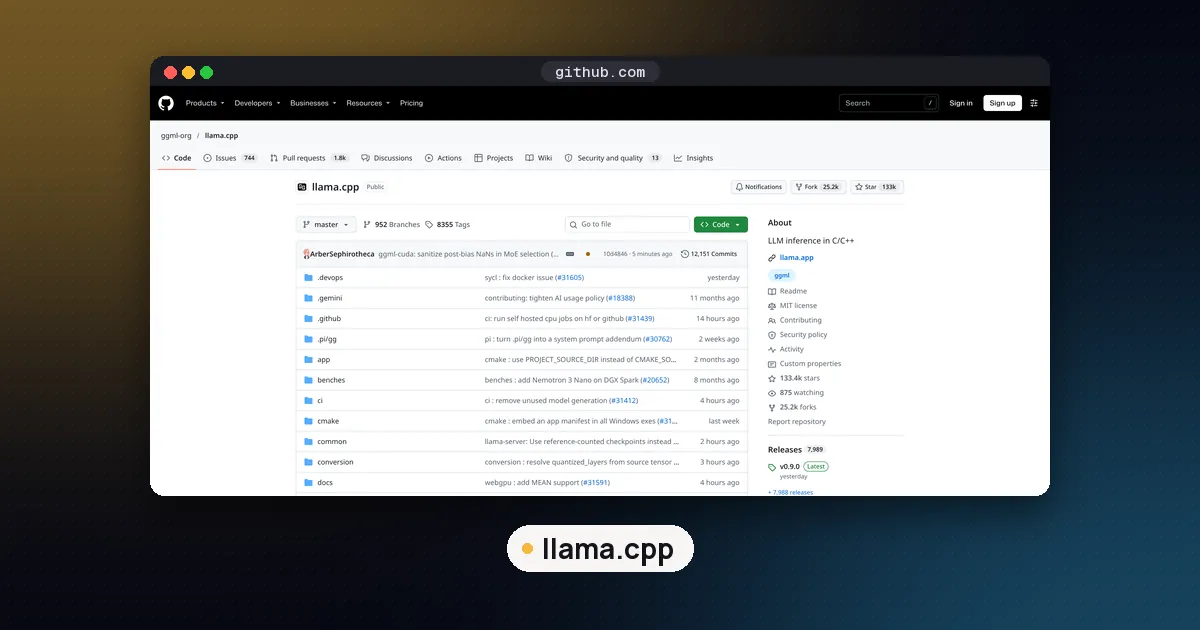
What Is ggml? The Engine Behind llama.cpp
What ggml is, how it relates to GGUF and llama.cpp, what changed in ggml v1.0.0 on Nov 13, 2026, how semantic versioning works now and how to install it.
How to · 9 min readListen
Hardware Requirements to Fine Tune an LLM
Fine tune LLM hardware requirements in 2026: GPU memory by method and model size, how context length changes it, plus RAM, disk, Mac and free GPU options.
How to · 10 min readListen
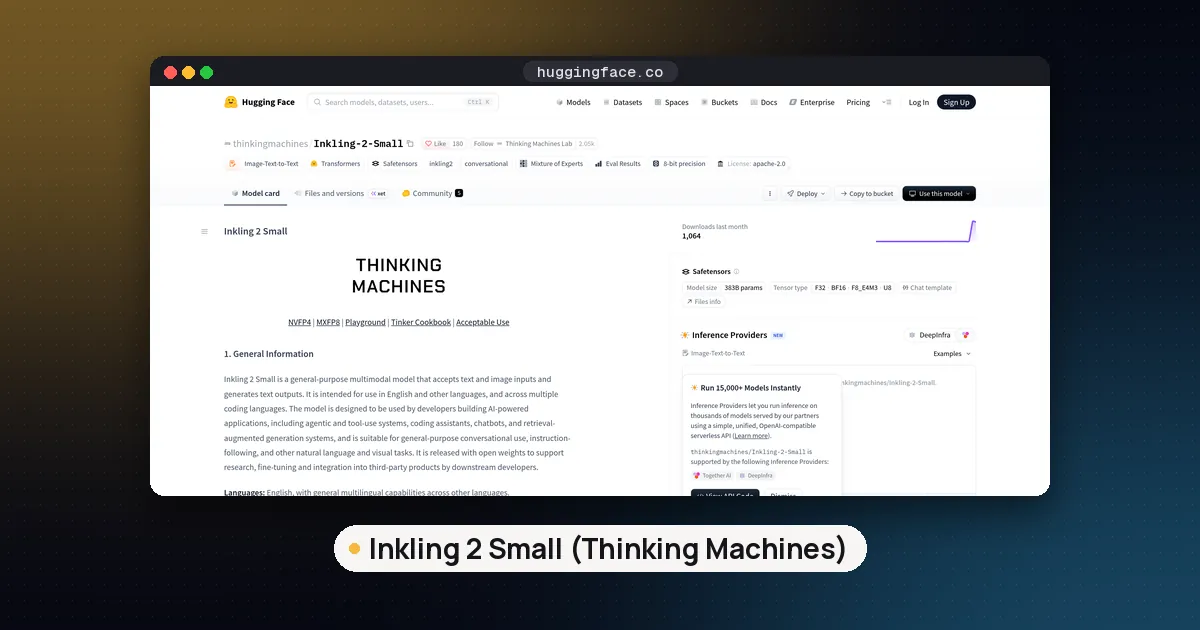
How to Run Inkling 2 Small Locally
Can you run Inkling 2 Small locally? GGUF sizes from 172 GB, official GPU needs, the llama.cpp branch, vLLM and SGLang setups, MLX status and Apache license.
How to · 10 min readListen
How to Fine Tune an LLM to Output JSON
How to fine tune an LLM to output JSON that matches your schema, with TRL and LoRA, a validated dataset, a parse rate test and constrained decoding as backup.
Comparisons · 9 min readListen
Google Colab vs Kaggle GPU: Which Free GPU Wins?
Google Colab vs Kaggle GPU compared on free hardware, weekly hours, session limits, idle timeouts, storage and paid plans, plus which to pick for fine tuning.
Explainers · 9 min readListen
What Is MACaQ? Huawei's 4 Bit Quantizer Explained
What MACaQ quantization is, how Huawei's new 4 bit method works across text, image, video and audio models, what MACaQ-R adds for GGUF, and who should try it.
Comparisons · 9 min readListen
Llama vs Gemma: Which Should You Run?
Llama vs Gemma in 2026 compared on sizes, memory, context, vision, audio, licence and vendor benchmarks, with a clear pick for each machine and use case.
Explainers · 10 min readListen
Is IBM Granite Free? License, Costs and Limits
Is IBM Granite free? The weights are Apache 2.0 and free to download, run and sell. See which models are not, what watsonx.ai charges and what IBM indemnity covers.
How to · 10 min readListen
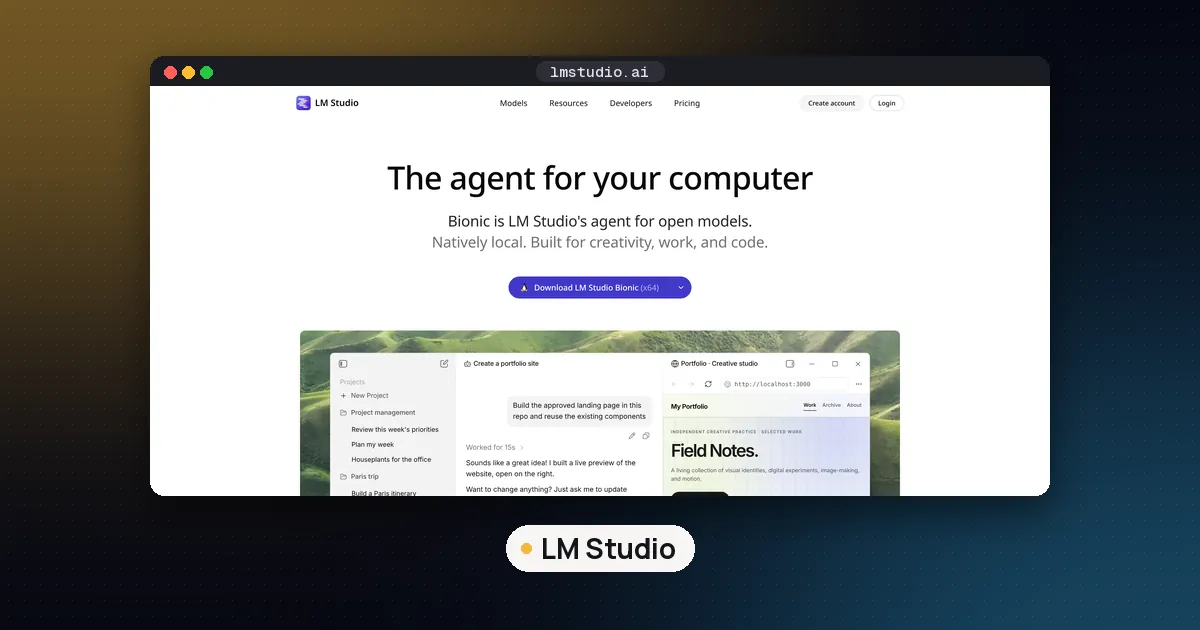
Best LM Studio Alternatives for Windows (2026)
The best LM Studio alternatives for Windows in 2026: Jan, Ollama, KoboldCpp, AnythingLLM, Lemonade and llama.cpp compared on license, GPU support and setup.
· updated
Comparisons · 9 min readListen
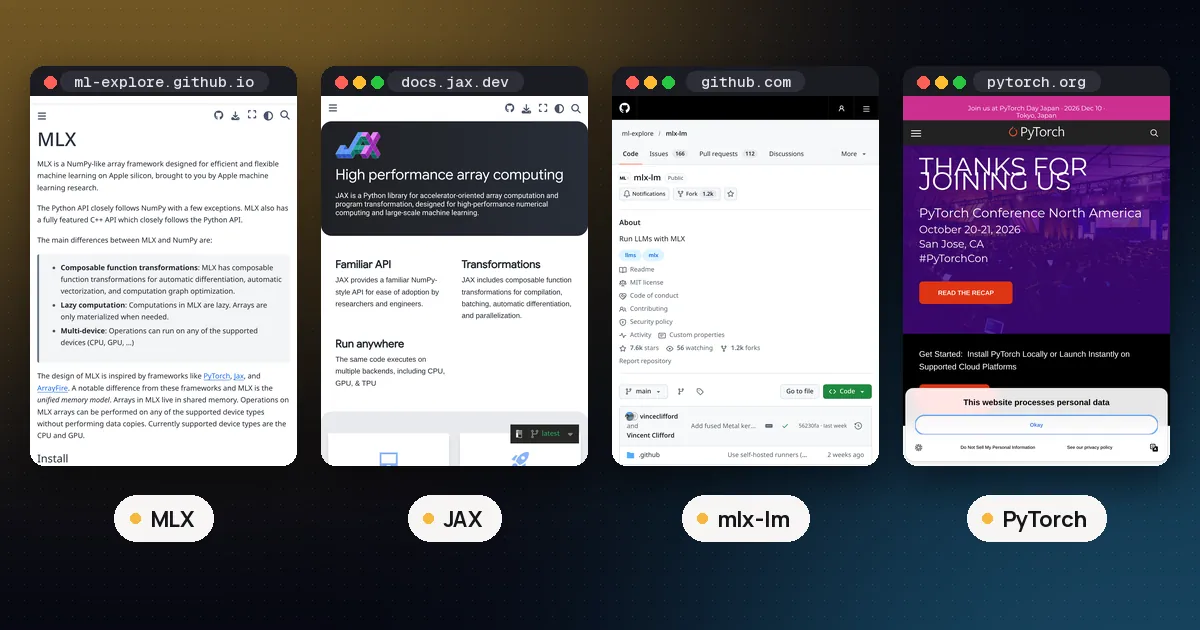
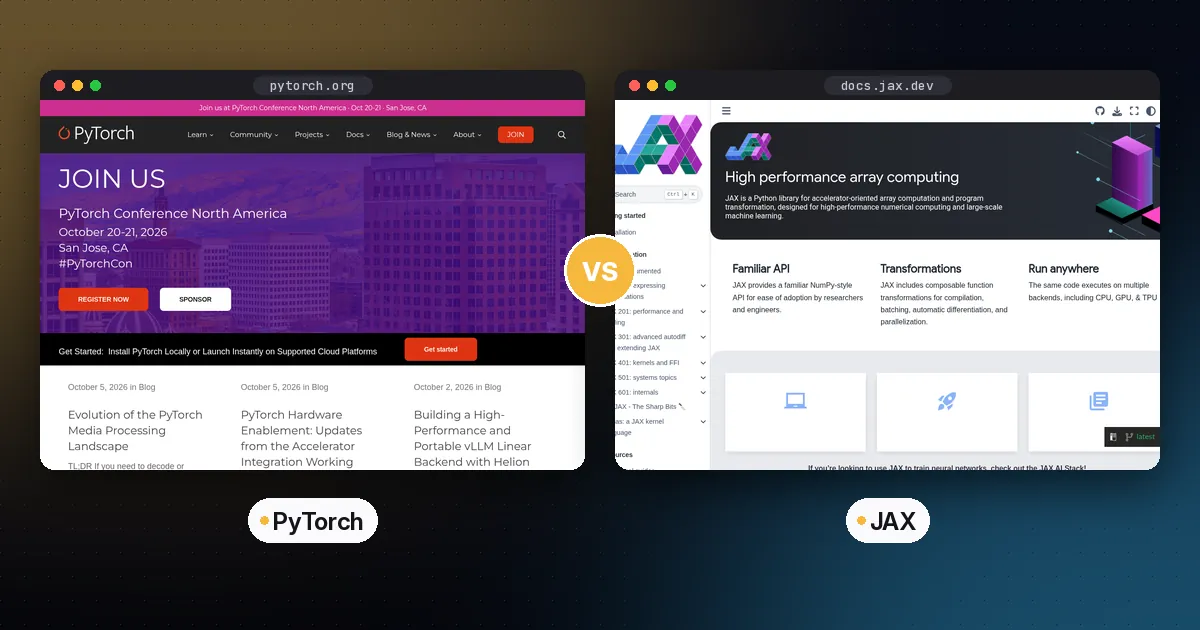
MLX vs JAX: Which Framework Should You Pick?
MLX vs JAX compared: Apple silicon and unified memory against XLA, TPUs and multihost scale, plus transforms, compilation, LLM tools, install needs and a verdict.
How to · 9 min readListen
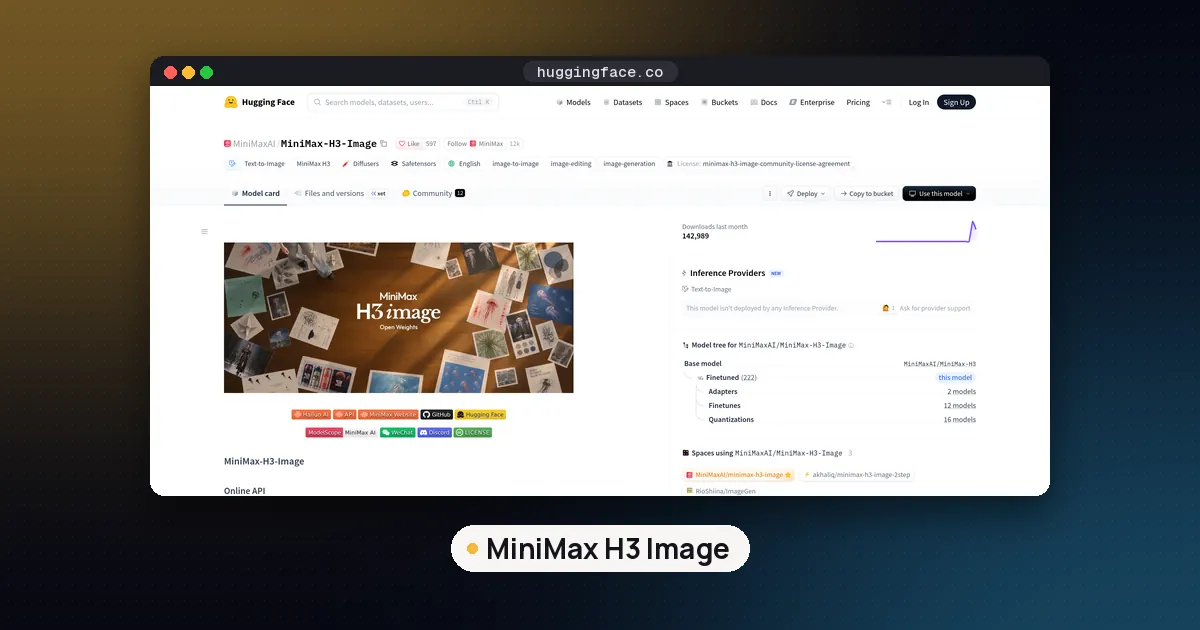
MiniMax H3 Image in ComfyUI: Setup and License
MiniMax H3 Image ComfyUI setup: which files to download, the fixed 6 step settings, editing with references, hardware needs and a license that excludes the US.
Explainers · 10 min readListen
What Is e-means? Meta's Faster k-means Explained
What e-means is, how Meta FAIR's new k-means replacement in Faiss reaches Lloyd's loss in a tenth of the passes, how to install it today and when to use it.
How to · 8 min readListen
How to Use Hugging Face Datasets (Step by Step)
How to use Hugging Face Datasets in 2026: install the library, load Hub and local files, stream big sets, map and filter rows, split, save and feed PyTorch.
Comparisons · 9 min readListen
gpt-oss vs Gemma 4: Which Should You Run?
gpt-oss vs Gemma 4 compared on sizes, memory, context, vision, reasoning modes, licence and vendor benchmarks, with a clear pick for each machine and job.
Comparisons · 10 min readListen
MLX vs PyTorch: Which Framework Fits Your Project?
MLX vs PyTorch compared for Apple silicon and beyond: unified memory, the MPS backend, speed tools, LLM fine tuning, install needs and which one to pick in 2026.
Explainers · 10 min readListen
llama-modchip: DeepSeek V4 Flash on CPU Only
What llama-modchip is, how it fits 284B DeepSeek V4 Flash into 64 GB of RAM with no GPU, what the 1.71 bit quant costs, and when stock llama.cpp is enough.
Comparisons · 10 min readListen
Llama vs Qwen: Which Should You Use?
Llama vs Qwen in 2026: Qwen has the newer, larger, Apache 2.0 lineup for local use, while Llama 3 and 4 still suit legacy stacks. Sizes, licences, setup.
How to · 10 min readListen
How to Use Open WebUI: Install and Connect Models
How to use Open WebUI: install it with Docker or pip, create the admin account, then connect Ollama, llama.cpp or LM Studio and fix an empty model list.
· updated
How to · 10 min readListen
How to Use llama.cpp: Install, Chat and Serve
How to use llama.cpp: install it, pull a GGUF model from Hugging Face, chat in the terminal, then run llama-server for a web UI and an OpenAI compatible API.
· updated
How to · 10 min readListen
How to Run Kimi K3 Locally
Can you run Kimi K3 or K3.1 Pro locally? GGUF sizes from 594 GB to 1.56 TB, real memory needs, llama.cpp and vLLM setups, license limits and cheaper options.
· updated
How to · 9 min readListen
How to Use LightGBM: Step by Step Guide
How to use LightGBM in 2026: install the Python package, build a Dataset, train with early stopping, use the scikit-learn API, and run on GPU or CUDA.
How to · 9 min readListen
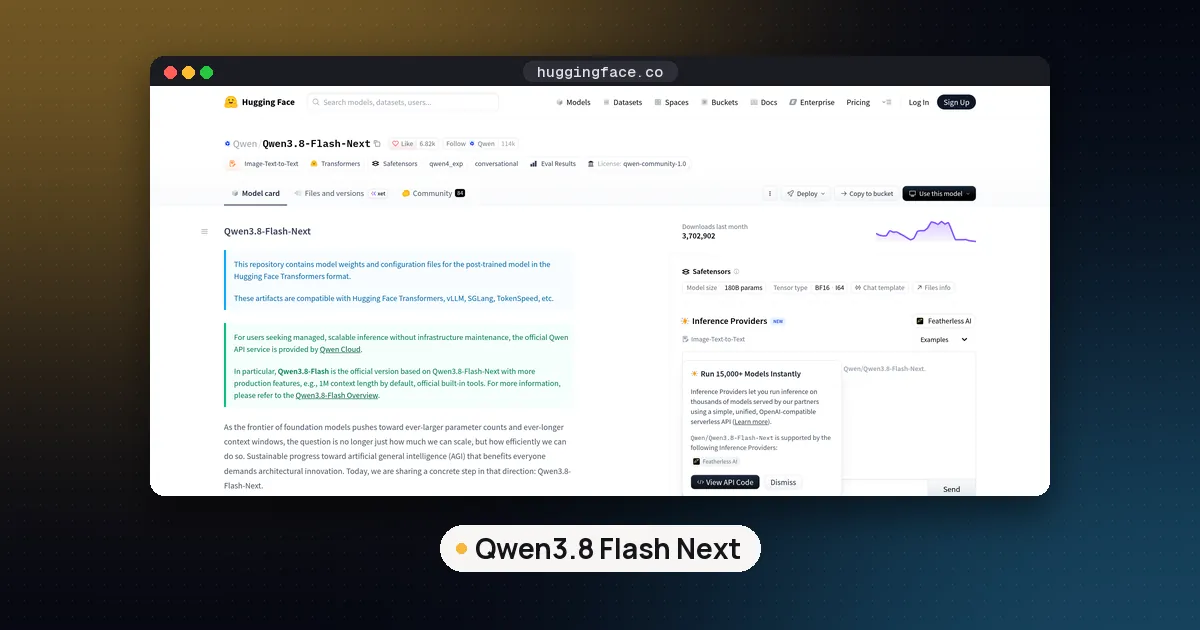
How to Run Qwen3.8 Flash Next Locally
Run Qwen3.8 Flash Next locally with Unsloth GGUF, ISTA GSQ builds, Ollama MLX or Strata: memory by quant, n gram table offload, MTP and thinking settings.
· updated
Comparisons · 8 min readListen
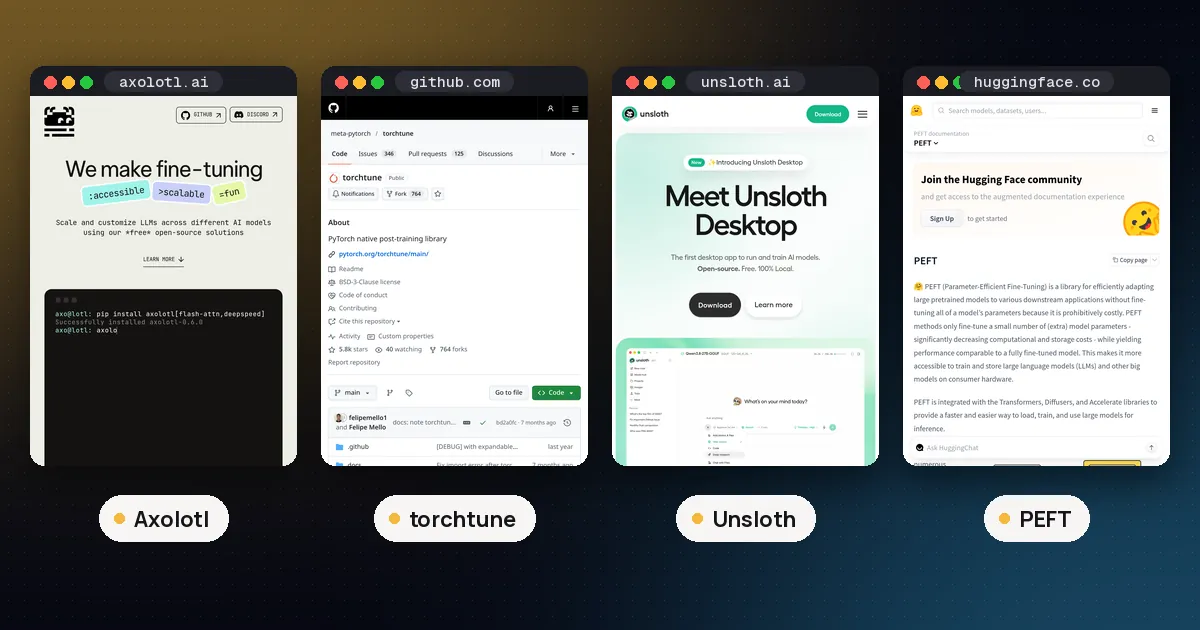
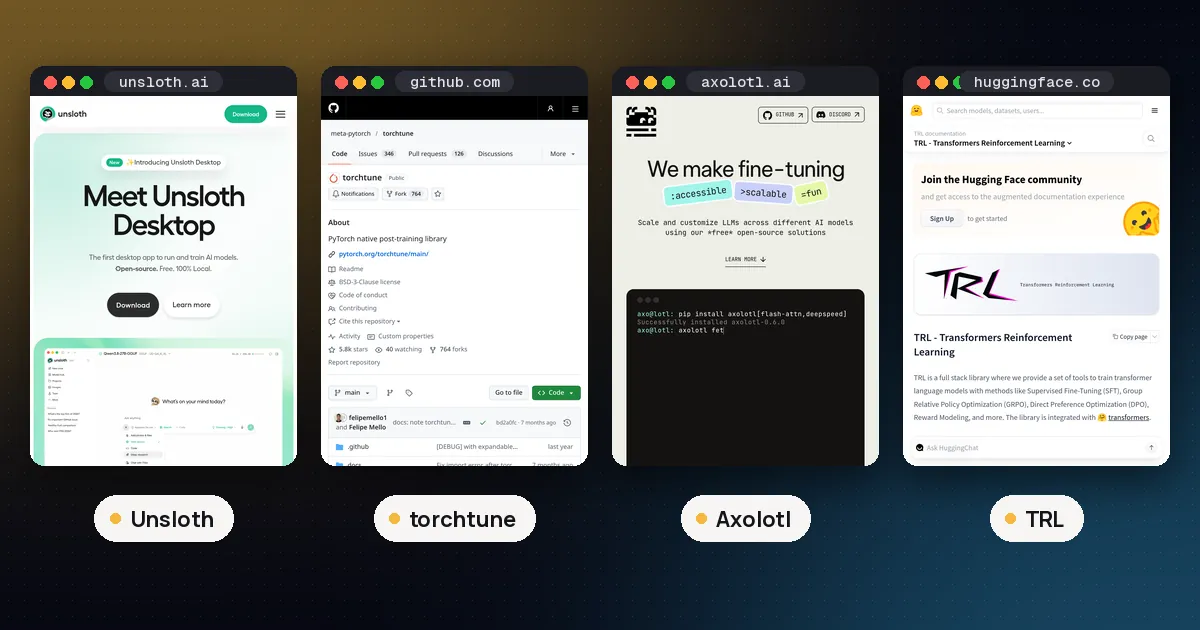
Torchtune vs Axolotl: Which Should You Use?
Axolotl for active YAML fine tunes; torchtune only for frozen recipes after its 2025 wind down. Compare status, features and when Unsloth fits better.
Comparisons · 8 min readListen
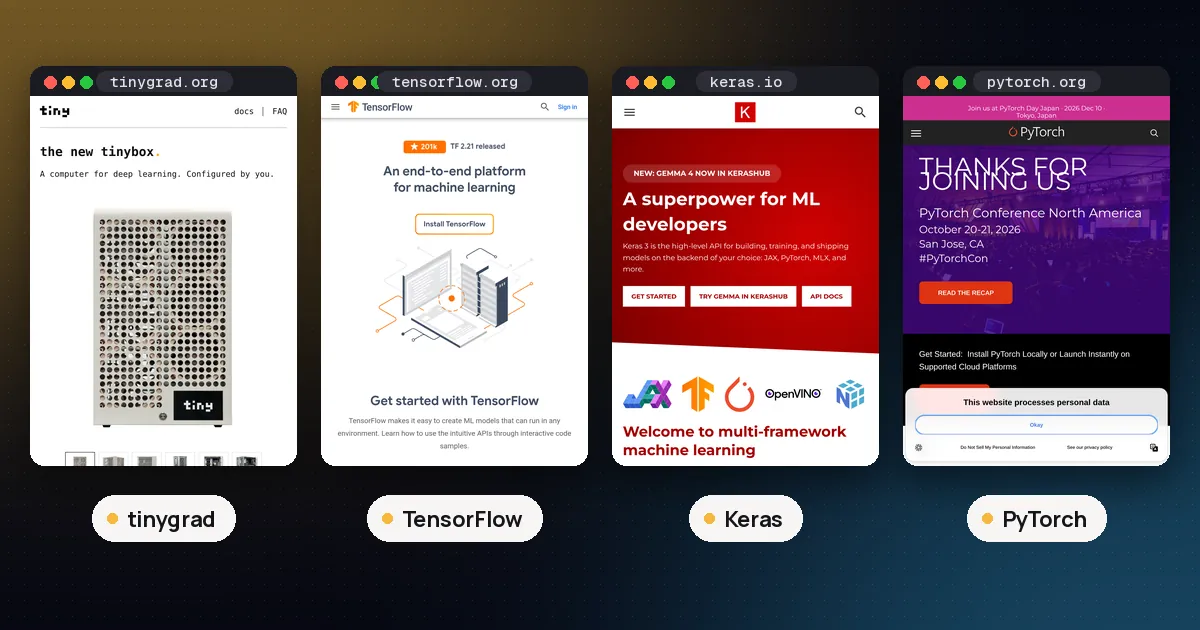
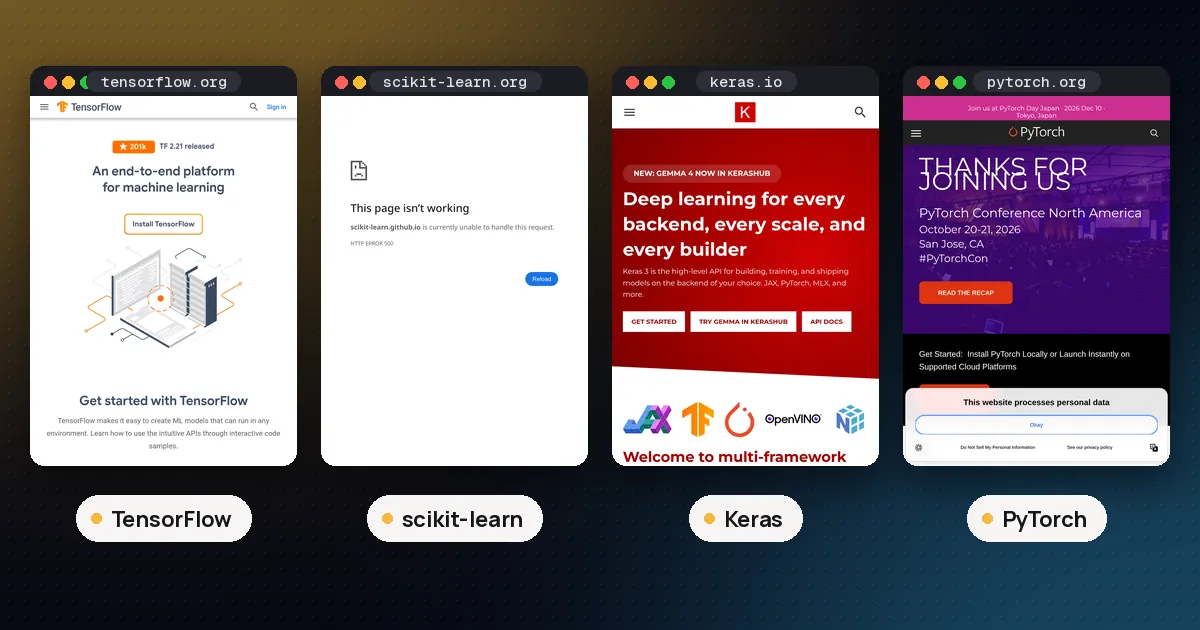
Tinygrad vs TensorFlow: Which Should You Use?
Tinygrad vs TensorFlow: pick TensorFlow with Keras for production serving and deploy paths, tinygrad for a small readable compiler stack across many GPUs.
How to · 10 min readListen
How to Run Ripple 65B Locally
Run Ripple 65B Preview locally with Ollama 0.40.16, stock llama.cpp b12167, Transformers or MLX. Quant sizes, the NVFP4 path and LM Studio status.
· updated
Comparisons · 8 min readListen
Torchtune vs Unsloth: Which Should You Use?
Torchtune vs Unsloth in 2026: pick Unsloth for new single GPU fine tunes. Torchtune is in maintenance mode after its 2025 wind down. How they differ.
Comparisons · 8 min readListen
TensorFlow vs scikit-learn: Which Should You Use?
TensorFlow vs scikit-learn: use scikit-learn for tables of numbers and classical models, TensorFlow for neural networks on images, text and audio. How to choose.
Explainers · 9 min readListen
Open Problems in Mechanistic Interpretability
Open problems in mechanistic interpretability, explained: what the 2025 review lists, why sparse autoencoders fell short, what changed since, and where to start.
Explainers · 9 min readListen
ML Framework for Varying Batch Size: What Works
The best ML framework for varying batch size is PyTorch, with TensorFlow close behind. How torch.compile, tf.function, JAX, MLX and TensorRT handle it.
How to · 10 min readListen
How to Run GLM 5.3 Flash Locally
Run GLM 5.3 Flash locally with llama.cpp and Unsloth GGUFs, KTransformers or vLLM. VRAM and RAM requirements, which quant fits 128 GB, MTP and settings.
· updated
How to · 9 min readListen
How to Run Nanbeige4.3 33B Locally
Run Nanbeige4.3 33B locally with llama.cpp, Ollama, LM Studio, MLX or vLLM. GGUF sizes, KV cache math, thinking mode settings and what fits 24 GB.
· updated
How to · 10 min readListen
How to Fine Tune an LLM with Reinforcement Learning
How to fine tune an LLM with reinforcement learning: when RL beats SFT, how to pick GRPO, DPO or PPO, write reward functions, and run a LoRA job in TRL or Unsloth.
How to · 10 min readListen
How to Fine Tune an LLM with a Knowledge Graph
How to fine tune an LLM with a knowledge graph: turn triples into varied training text, teach the model to reason over graph paths, and test held out facts.
How to · 10 min readListen
How to Run Unlimited OCR 2 Locally
Run Baidu's Unlimited OCR 2 locally with Transformers, SGLang, patched llama.cpp GGUF or MLX, with file sizes, output format and why Ollama can't load it yet.
How to · 10 min readListen
How to Fine Tune a Thinking LLM or Instruct Model
How to fine tune an LLM thinking or instruct model without breaking it: pick the right variant, format reasoning traces, keep 75% reasoning data, fix templates.
Explainers · 10 min readListen
Can a Local LLM Use RAM Instead of VRAM?
Can a local LLM use RAM instead of VRAM? Yes. llama.cpp, Ollama, LM Studio and vLLM can offload to system RAM. Here is how it works and how slow it gets.
How to · 9 min readListen
How to Run Mistral Large 4 Locally
Can you run Mistral Large 4 locally? Real memory needs for each GGUF, MLX and NVFP4 build, llama.cpp and vLLM commands, Ollama status and the license catch.
· updated
How to · 9 min readListen
How to Fine Tune an LLM in Google Colab
How to fine tune an LLM in Google Colab for free: pick a model that fits the T4, run an Unsloth LoRA notebook, save to Google Drive, then export to GGUF for Ollama.
How to · 9 min readListen
How to Fine Tune an LLM for LM Studio
Can you fine tune an LLM in LM Studio? Not inside the app. Train a LoRA with Unsloth or mlx-lm, export to GGUF, then import, test and serve it in LM Studio.
How to · 10 min readListen
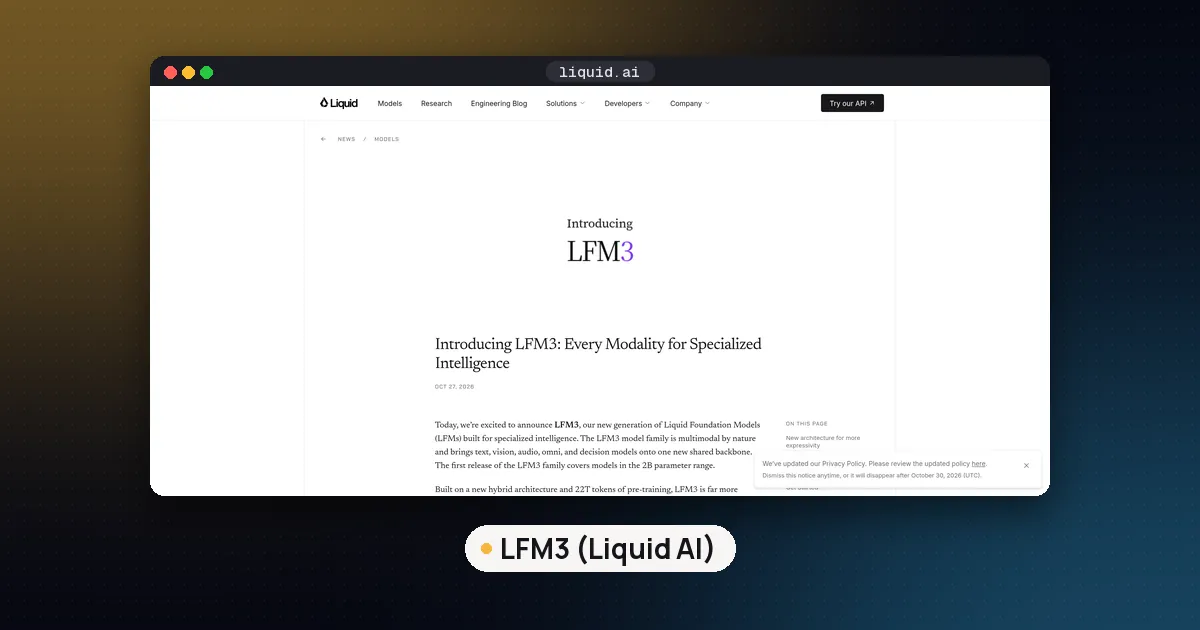
How to Run LFM3 Locally (1.7B, VL, Audio, Omni)
How to run LFM3 locally with Ollama, llama.cpp or LM Studio: Liquid AI's 1.7B model, memory by quant, the VL, Audio and Omni versions, and the license limits.
How to · 9 min readListen
How to Fine Tune an LLM for a Classification Task
How to fine tune an LLM for a classification task: pick a classification head or label generation, train LoRA with PEFT, handle imbalance and score with macro F1.
How to · 10 min readListen
How to Use TensorFlow in Jupyter Notebook (2026)
How to use TensorFlow in Jupyter Notebook: venv, kernel, VS Code or JupyterLab, TensorBoard (now a separate install), GPU memory, and the import errors we hit.
· updated
Explainers · 9 min readListen
Open Weight Model Leaderboard: How to Read It
Open weight model leaderboard guide: the top open models on Artificial Analysis and LMArena as of November 8, 2026, what each score measures and how to use it.
· updated
Explainers · 9 min readListen
What Is Safetensors? Safe Model Files Explained
What is safetensors? A plain guide to the Hugging Face model file format: why it is safer than pickle, how it compares to GGUF, and how to load or convert it.
Comparisons · 10 min readListen
Ollama vs vLLM: Which Should You Run?
Ollama vs vLLM compared: setup, model formats, speed for one user or many, hardware, Mac support and the signs it is time to move from Ollama to vLLM.
· updated
How to · 8 min readListen
How to Run ComfyUI on Mac (Apple Silicon)
How to run ComfyUI on Mac: install Comfy Desktop or set it up by hand with PyTorch and Metal, where model files go, what fits in memory and how to fix errors.
Explainers · 9 min readListen
RTX 3090 BF16 at Full Rate: What It Means for AI
RTX 3090 BF16 runs at half rate, and a new Linux mod restores it on RTX 30 cards. What it speeds up for local LLMs, what it doesn't, the risks and setup.
Comparisons · 9 min readListen
Tinygrad vs MLX: Which Should You Use?
Tinygrad vs MLX compared for Apple silicon and beyond: hardware support, lazy graphs, JIT and compile, LLM tooling, install and which framework fits your project.
How to · 9 min readListen
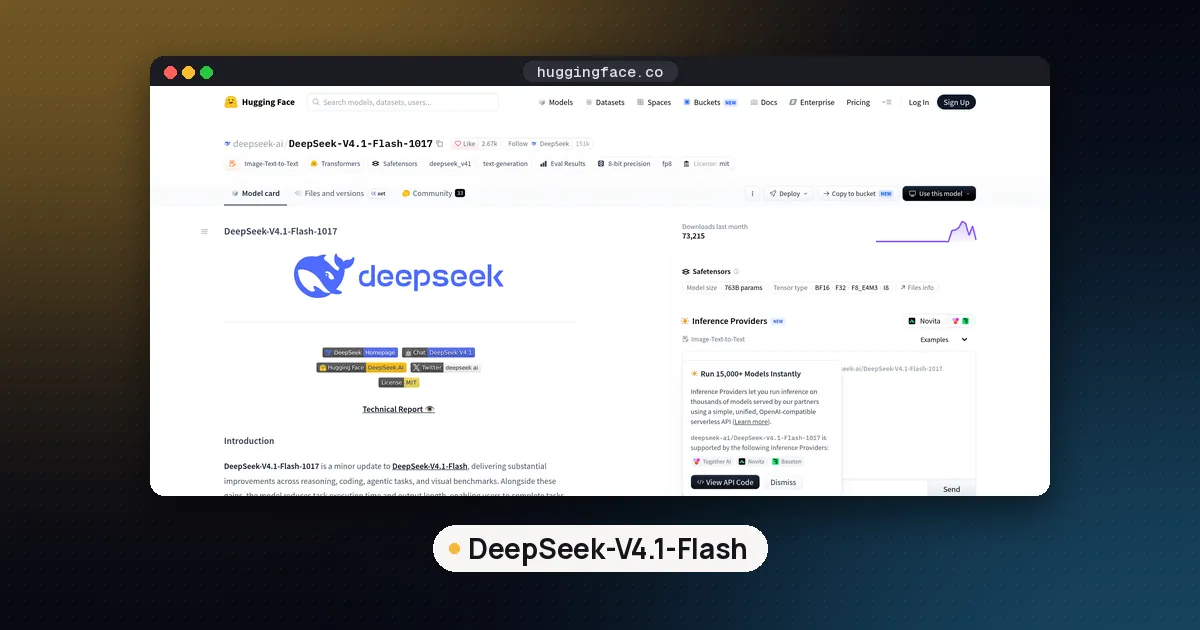
How to Run DeepSeek V4.1 Flash Locally
Can you run DeepSeek V4.1 Flash locally? Real RAM, VRAM and disk needs by GGUF, Strata on one 12 GB GPU, the llama.cpp PR, vLLM, Ollama and DGX Spark.
Comparisons · 9 min readListen
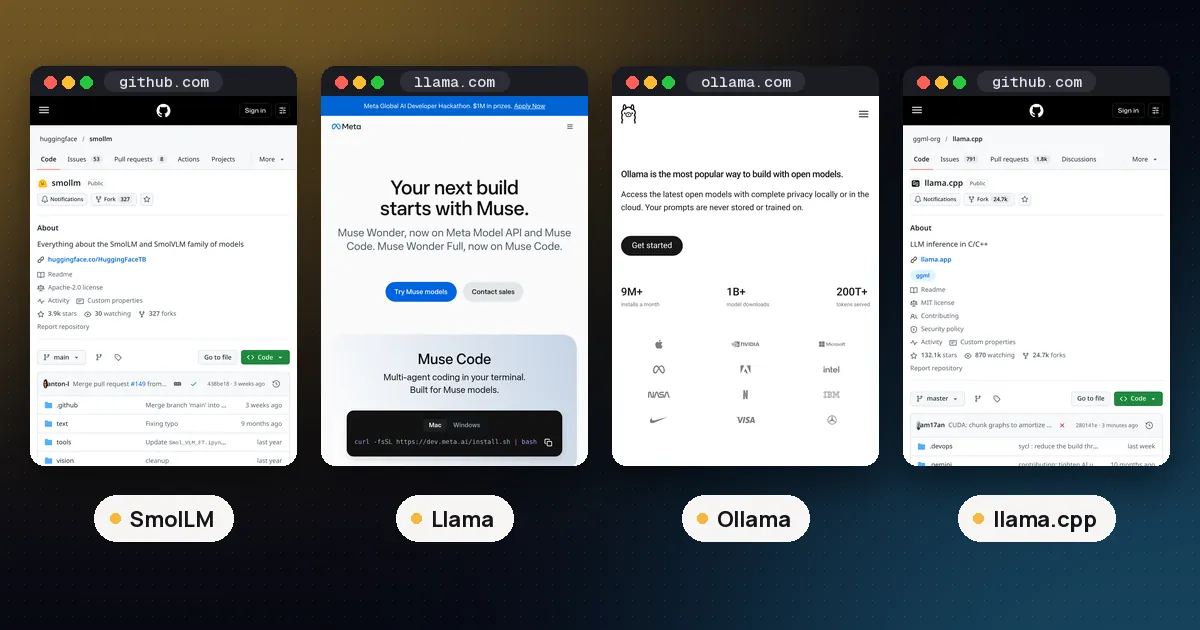
SmolLM vs Llama: Which 3B Model Should You Run?
SmolLM vs Llama compared on benchmarks, licence, context, languages, memory and local setup, so you can choose between SmolLM3 and Llama 3.2 for your project.
Comparisons · 9 min readListen
SGLang vs vLLM on DGX Spark: Which to Use?
SGLang vs vLLM on DGX Spark compared on setup, memory, NVFP4 models, speed and clustering, so you can pick the right server for your GB10 desktop.
How to · 9 min readListen
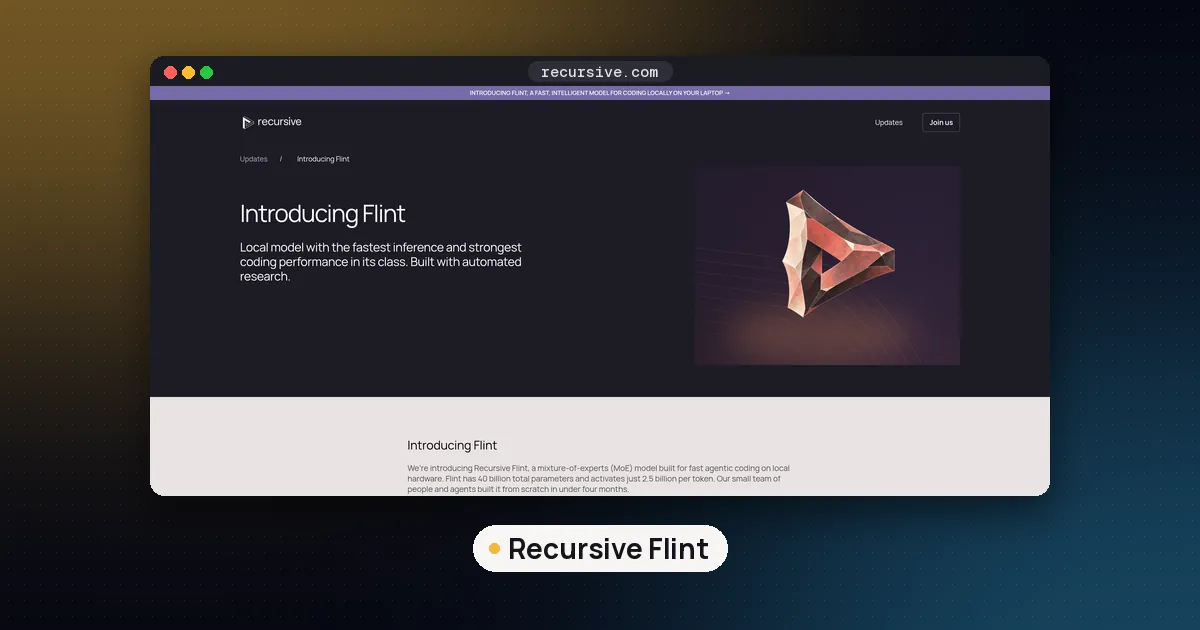
Recursive Flint: Run the 40B Coding Model Locally
Recursive Flint is an Apache 2.0 coding model with 40B total and 2.5B active parameters. How to run Flint locally with Ollama, llama.cpp, rec or Unsloth.
Best of · 10 min readListen
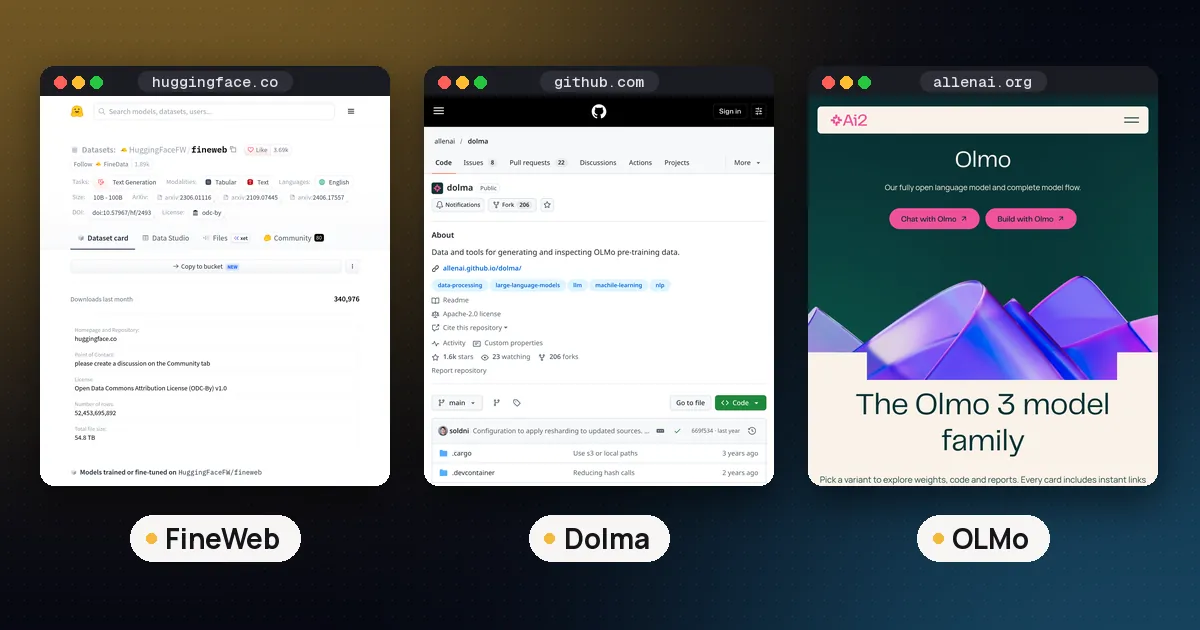
Best LLM Pretraining Datasets in 2026 (Free and Open)
Best LLM pretraining datasets in 2026, with sizes and licenses checked: FineWeb-Edu for small models, DCLM and Dolma 3 at scale, Common Pile for clean data.
· updated
Comparisons · 8 min readListen
SmolLM vs Gemma: Which Small Model to Use?
SmolLM vs Gemma compared on size, licence, context, languages, vision and audio, local setup and fine tuning, so you can pick the right small model in 2026.
How to · 9 min readListen
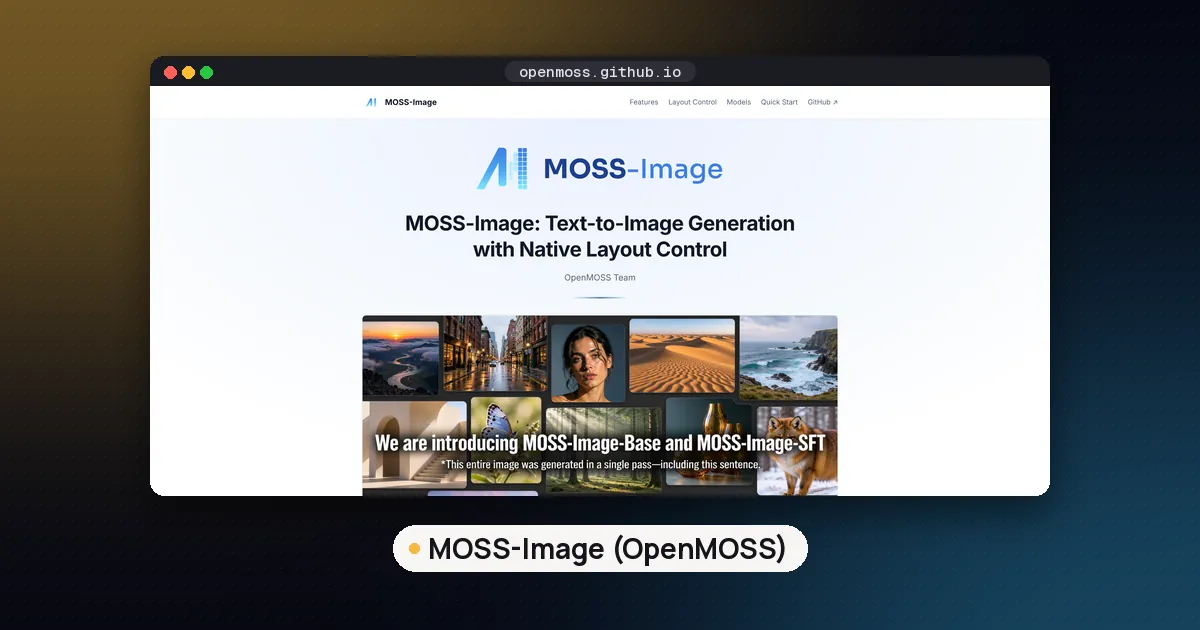
MOSS-Image: Run It Locally in ComfyUI
MOSS-Image is an Apache 2.0 open weight 5B text to image model built for text and layouts. How to run MOSS-Image in ComfyUI, file sizes and best settings.
How to · 9 min readListen
Best Local LLM for Image Generation in 2026
The best local LLM for image generation is really an open image model. Our picks by GPU and license: FLUX 3 Klein, Z-Image Turbo, Qwen-Image 2.1 and more.
· updated
Explainers · 6 min readListen
What Is DeepInfer? DeepSeek's Engine vs vLLM
DeepInfer is DeepSeek's open source engine for DeepSeek-V4.1-Flash. What it does, the hardware it needs, what is missing, and when vLLM or SGLang fits better.
How to · 8 min readListen
LLM Distillation vs Quantization: Key Differences
LLM distillation vs quantization: distillation trains a smaller student model, quantization stores the same weights in fewer bits. When to use each, or both.
How to · 9 min readListen
FLUX Open Weights: Every Model and Its License
FLUX open weights explained: every Black Forest Labs model you can download, its license, file size and VRAM, plus how to run FLUX 3 Klein in ComfyUI.
· updated
How to · 10 min readListen
How to Run Muse Spark Open Locally (816B MoE)
Can you run Muse Spark Open locally? Real memory needs by quant (GGUF, MLX, NVFP4), llama.cpp and MLX commands, Mac Studio setups, licence terms and limits.
· updated
Best of · 9 min readListen
Best ML Frameworks for Python in 2026
The best ML frameworks for Python in 2026, ranked by job: PyTorch, scikit-learn, JAX, Keras 3, XGBoost, LightGBM, TensorFlow, MLX and more, with versions.
· updated
Explainers · 10 min readListen
What Is Mechanistic Interpretability Research?
What is mechanistic interpretability research? A plain guide to features, circuits, superposition, sparse autoencoders, key papers, open tools and how to start.
· updated
How to · 9 min readListen
How to Use TensorFlow in Python (Step by Step)
How to use TensorFlow in Python: install it in a venv, work with tensors and gradients, train a Keras model, feed data with tf.data and save it.
· updated
How to · 8 min readListen
How to Run LFM2.5 24B Locally
Run Liquid AI LFM2.5-24B-A2B locally with Ollama, llama.cpp or MLX: VRAM by quant, Q4_K_M sizes, Ollama 0.17.1 caveat, sampling settings and agent tips.
· updated
Comparisons · 9 min readListen
Tinygrad vs PyTorch Performance
Tinygrad vs PyTorch performance: when TinyJit and BEAM can outrun eager PyTorch, when torch.compile and the ecosystem win, and how to compare them fairly.
How to · 10 min readListen
How to Fine Tune an LLM for Code Generation
How to fine tune an LLM for code generation: pick a coder base model, build an instruction or FIM dataset, train a LoRA with TRL or Unsloth, test with pass@k.
· updated
How to · 9 min readListen
How to Use TensorFlow with GPU (2026 Setup)
How to use TensorFlow with GPU in 2026: the pip [and-cuda] install on Linux and WSL2, Docker, Mac Metal, how to verify the GPU, and fixes for common errors.
· updated
How to · 8 min readListen
Qwen 3.6 MoE Local Setup: 35B-A3B Guide
Qwen 3.6 MoE local setup: pick 35B-A3B or dense 27B by VRAM, then run with Ollama, llama.cpp or LM Studio, plus thinking, vision and MTP tips.
· updated
Comparisons · 7 min readListen
TensorFlow vs PyTorch vs Keras in 2026
TensorFlow vs PyTorch vs Keras in 2026: Keras 3 multibackend, which is easier to learn, open weight LLM ecosystem fit, and who should pick each stack.
· updated
How to · 8 min readListen
How to Run DeepSeek Locally with Ollama
Run DeepSeek Locally with Ollama: pick R1 distill tags by download size, set context length, handle thinking output, and know when 671B V3 is server only.
· updated
How to · 9 min readListen
How to Use Local LLM in VS Code
Wire a local LLM into VS Code with Ollama: official Chat extension, Continue.dev for tab complete, model picks by VRAM, and privacy tips for offline coding.
· updated
How to · 8 min readListen
How to Quantize LLM Models
Practical how to quantize LLM models: llama.cpp convert then Q4_K_M, Hugging Face bitsandbytes 4 bit loads, Ollama GGUF import, and when to use each path.
· updated
How to · 8 min readListen
How to Run Gemma 4 Locally (VRAM + Setup)
Run Gemma 4 locally with Ollama, llama.cpp or LM Studio: pick E2B, E4B, 12B, 26B-A4B or 31B by memory, thinking mode, vision tips and sampling settings.
· updated
Best of · 10 min readListen
Open Source LLM Models to Run Locally
Open source LLM models to run locally: match Qwen3, Gemma 4, gpt-oss and DeepSeek R1 distill tags to your VRAM, with Ollama setup and licence caveats.
· updated
How to · 10 min readListen
How to Run Bonsai 2 27B Locally (Ternary GGUF)
Run Prism ML's ternary Bonsai 2 27B locally: the new Q2_0 file for stock llama.cpp, PQ2_0 vs PTQ1_0, the Ollama library build, memory needs and settings.
· updated
How to · 8 min readListen
EmbeddingGemma 2: How to Use It Locally
How to run Google's EmbeddingGemma 2 locally: setup with Sentence Transformers or Ollama, task prefixes, Matryoshka truncation, GGUF and MLX builds and memory needs.
· updated
How to · 9 min readListen
How to Run Qwen 3.8 Locally (VRAM + Setup)
Run Qwen 3.8 locally with Ollama, llama.cpp, LM Studio or vLLM: which quant fits 8, 16 or 24 GB, Mac setup, thinking controls and context memory.
· updated
Comparisons · 10 min readListen
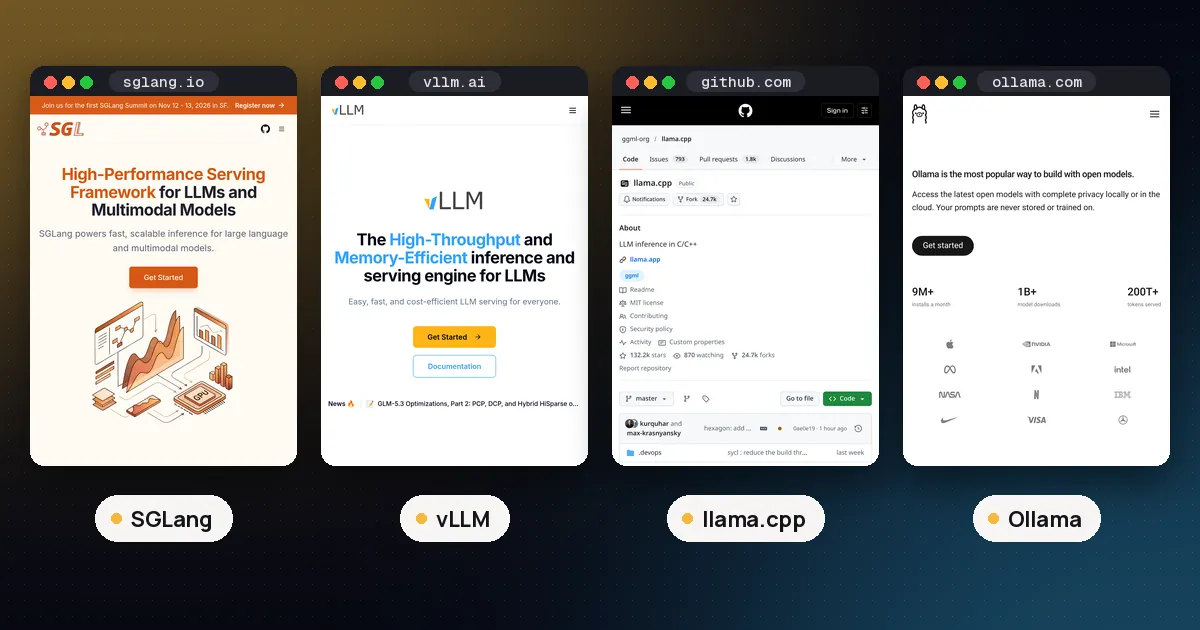
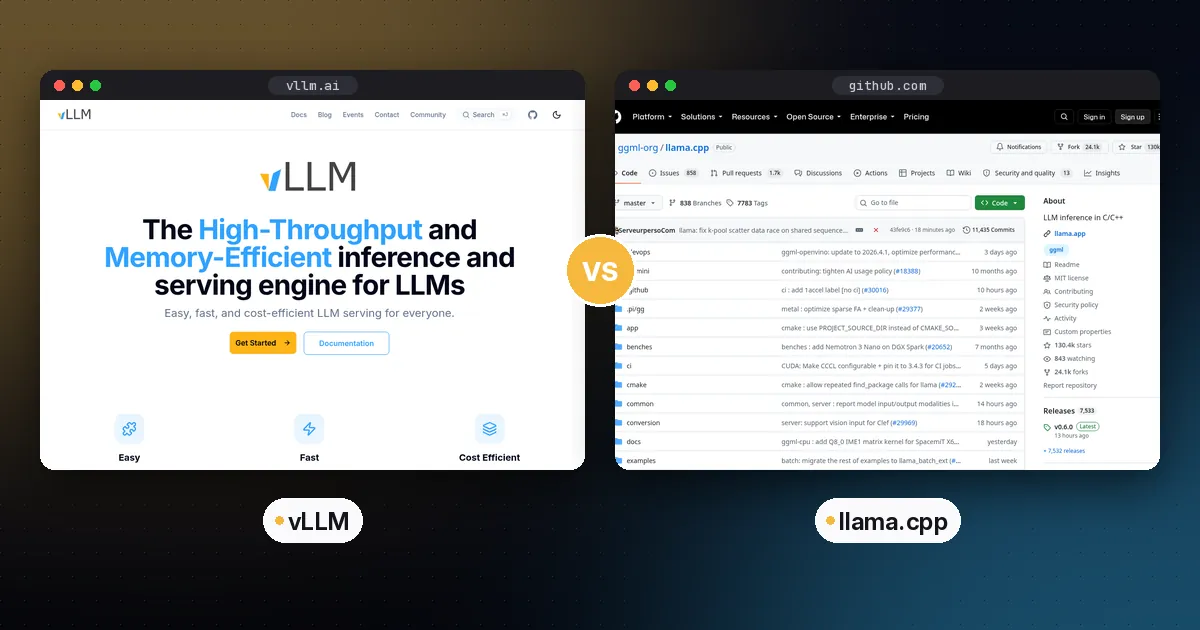
vLLM vs llama.cpp vs SGLang: Which Should You Use?
vLLM vs llama.cpp vs SGLang in 2026: speed and benchmarks, what vLLM 0.34 changed, how RadixAttention works, hardware, ports and which inference engine to pick.
· updated
How to · 10 min readListen
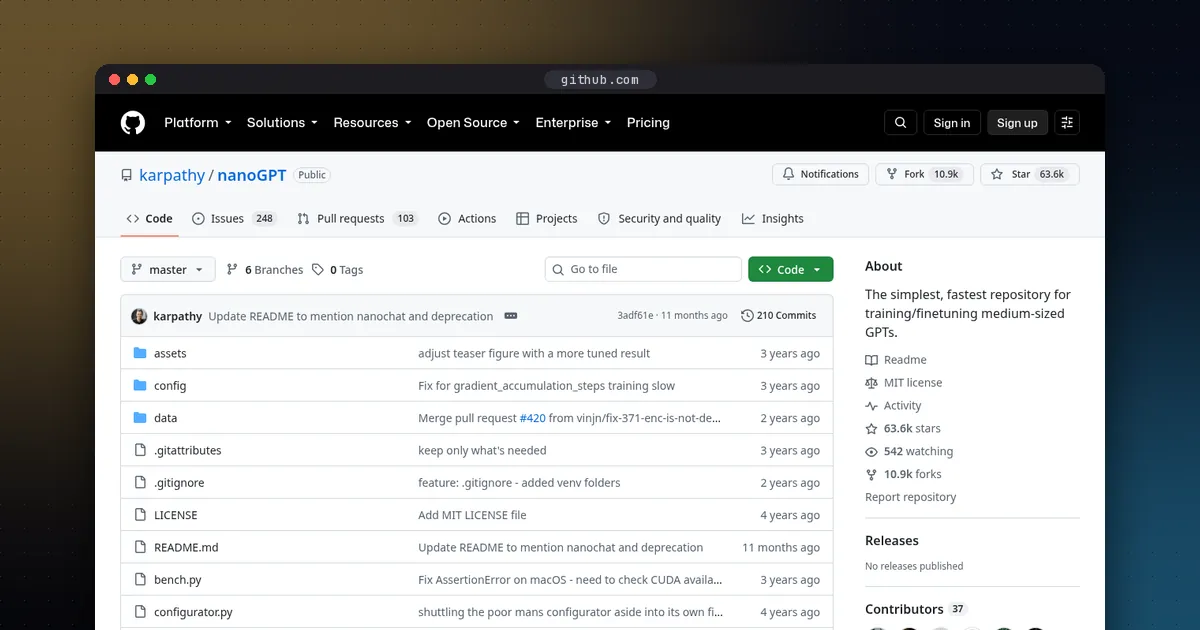
Train a Small LLM From Scratch: nanoGPT and nanochat
Train a small LLM from scratch with nanoGPT or nanochat: our CPU test run, the nanoGPT speedrun, costs, datasets, compute math and when Megatron-LM fits.
· updated
Comparisons · 9 min readListen
PyTorch vs JAX in 2026: Speed, TPUs and Which to Learn
PyTorch vs JAX in 2026: our CPU speed test, eager vs compiled code, TPU support now that TorchTPU replaces PyTorch/XLA, the LLM ecosystem, and which to learn first.
· updated
Comparisons · 10 min readListen
Ollama vs llama.cpp vs LM Studio: Which to Use?
Ollama vs llama.cpp vs LM Studio in 2026, with our speed test on the same GGUF file, ports, licenses, Mac support, the context trap and which runner to pick.
· updated
Comparisons · 10 min readListen
MLX vs GGUF on Mac: Speed, Quality and Which to Use
MLX vs GGUF on Mac: MLX is often faster at generation on Apple Silicon, GGUF has more quants and runs anywhere. How to test both and which one to pick.
· updated
Explainers · 10 min readListen
KV Cache Quantization Explained: q8_0 vs q4_0 Settings
KV cache quantization explained: q8_0 nearly halves cache memory with little loss, q4_0 saves more but can hurt long context. Measured sizes and runtime settings.
· updated
How to · 8 min readListen
How to Run gpt-oss Locally: 20b, 120b and Mac
Run gpt-oss locally: hardware for gpt-oss-20b and 120b, setup in Ollama, LM Studio, llama.cpp or vLLM, running it on a Mac, reasoning effort and harmony format.
· updated
How to · 10 min readListen
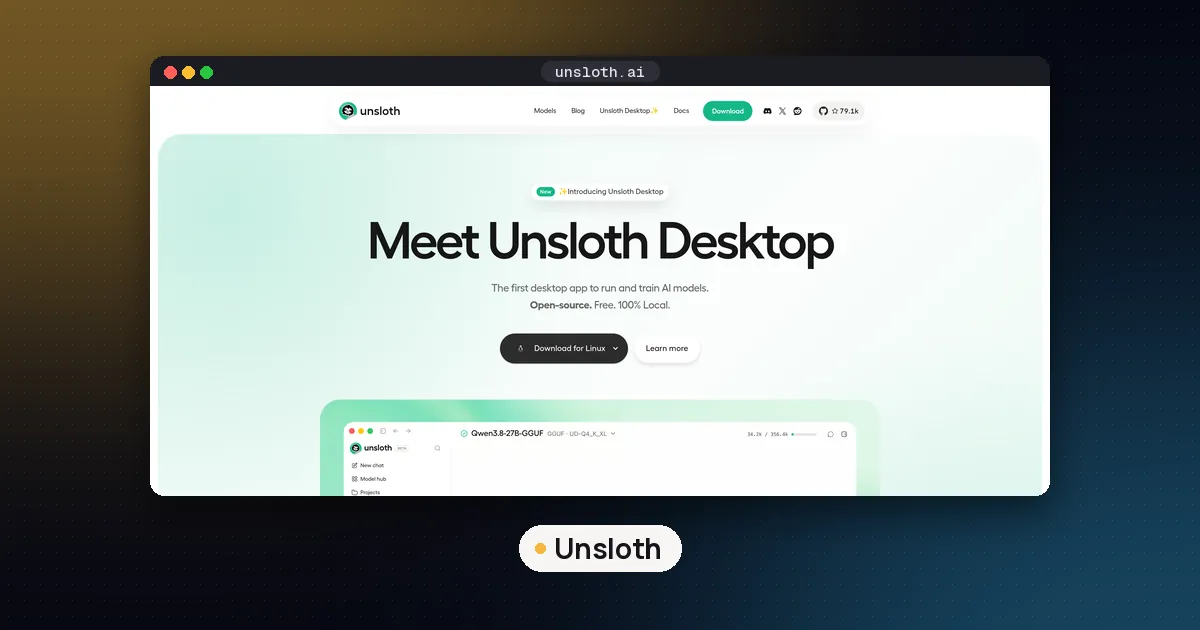
How to Fine Tune an LLM Locally, Step by Step
Fine tune an LLM locally in 2026: VRAM needed per model size, Unsloth vs Axolotl vs mlx-lm, formatting custom data, training a LoRA and running it in Ollama.
· updated
Explainers · 9 min readListen
GRPO vs PPO Explained: Which RL Method to Use?
GRPO vs PPO explained: how each trains LLMs with rewards, why GRPO drops the critic, what papers show on performance, where DPO fits, and which to use in 2026.
· updated
Explainers · 9 min readListen
GGUF Quantization Explained: Types and Comparison
GGUF quantization explained: every quant type from Q2_K to Q8_0 compared by size, bits per weight and quality loss, GGUF vs safetensors, and which file to pick.
· updated
Explainers · 8 min readListen
Open Weight vs Open Source Models Explained
Open weight vs open source models explained: OSI definition, licence table for Llama, Qwen, Gemma and OLMo, and when each label fits your project.
· updated
Explainers · 9 min readListen
How Much VRAM Do I Need for an LLM?
How much VRAM do you need for an LLM? A simple formula for weights plus KV cache, worked examples from real model configs, and what fits in 8, 16, 24 or 32 GB.
· updated
Explainers · 9 min readListen
Speculative Decoding vs MTP: Which Is Faster?
Speculative decoding vs MTP: MTP is speculative decoding with the model's own heads. MTP vs draft models, Gemma 4 MTP, DFlash, and setup in llama.cpp, vLLM, Ollama.
· updated
Explainers · 10 min readListen
QLoRA vs LoRA vs DoRA: Which Fine Tuning Method?
QLoRA vs LoRA in 2026: QLoRA trains on a 4 bit base for about a quarter of the memory, LoRA keeps 16 bit for speed and fidelity. VRAM table, DoRA and settings.
· updated
Comparisons · 9 min readListen
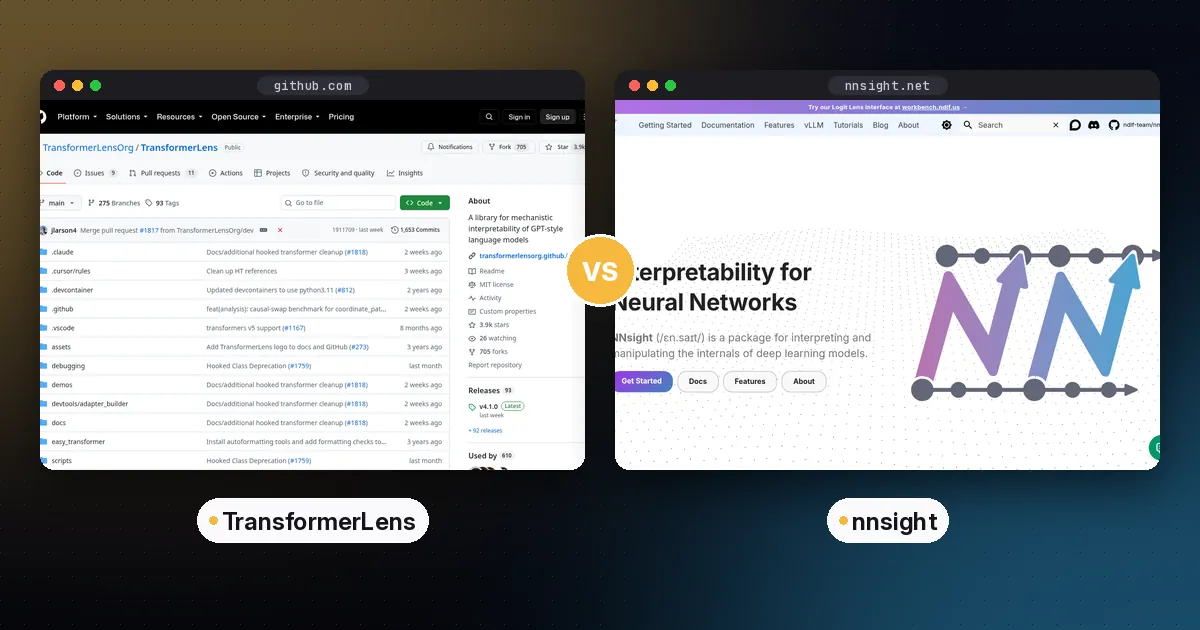
Neuronpedia Guide: TransformerLens vs nnsight
Neuronpedia explained (SAE features, Jacobian Lens, circuit tracer, API) and TransformerLens vs nnsight compared: TransformerLens 4, nnsight 0.8 and NDIF.
· updated