// guides · comparisons
Comparisons
This topic collects the Axiomi comparisons on open models, foundations and research. Each one puts two or more options on the same checklist: what they do, what they cost, where they run and who they suit, using each vendor's own documentation and pricing pages read on the date shown.
There are 22 guides here, published from Oct 05, 2026 to Nov 13, 2026. The tools they cover most often are PyTorch, Ollama and llama.cpp.
How to choose: start with the guide that names the exact pair you are deciding between. If none does, open the closest one and read its at a glance table first, then the pricing section, since plans change most often. Every guide ends with a short verdict and an FAQ, and the last checked date tells you how fresh the facts are.
9 min readListen
Google Colab vs Kaggle GPU: Which Free GPU Wins?
Google Colab vs Kaggle GPU compared on free hardware, weekly hours, session limits, idle timeouts, storage and paid plans, plus which to pick for fine tuning.
9 min readListen
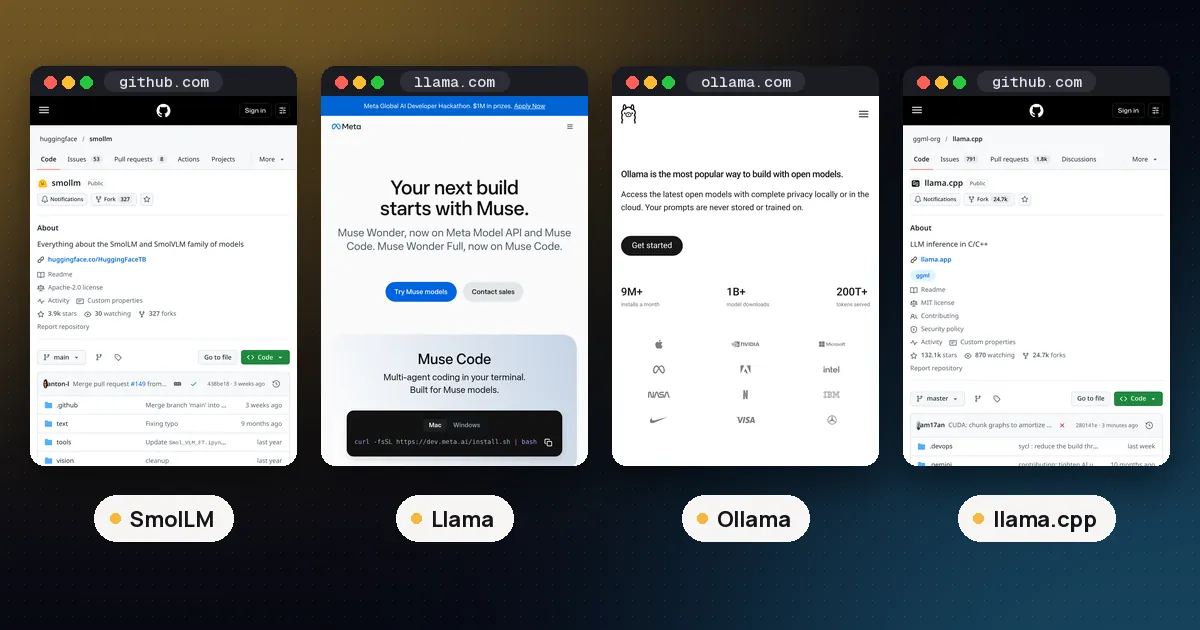
Llama vs Gemma: Which Should You Run?
Llama vs Gemma in 2026 compared on sizes, memory, context, vision, audio, licence and vendor benchmarks, with a clear pick for each machine and use case.
9 min readListen
MLX vs JAX: Which Framework Should You Pick?
MLX vs JAX compared: Apple silicon and unified memory against XLA, TPUs and multihost scale, plus transforms, compilation, LLM tools, install needs and a verdict.
9 min readListen
gpt-oss vs Gemma 4: Which Should You Run?
gpt-oss vs Gemma 4 compared on sizes, memory, context, vision, reasoning modes, licence and vendor benchmarks, with a clear pick for each machine and job.
10 min readListen
MLX vs PyTorch: Which Framework Fits Your Project?
MLX vs PyTorch compared for Apple silicon and beyond: unified memory, the MPS backend, speed tools, LLM fine tuning, install needs and which one to pick in 2026.
10 min readListen
Llama vs Qwen: Which Should You Use?
Llama vs Qwen in 2026: Qwen has the newer, larger, Apache 2.0 lineup for local use, while Llama 3 and 4 still suit legacy stacks. Sizes, licences, setup.
8 min readListen
Torchtune vs Axolotl: Which Should You Use?
Axolotl for active YAML fine tunes; torchtune only for frozen recipes after its 2025 wind down. Compare status, features and when Unsloth fits better.
8 min readListen
Tinygrad vs TensorFlow: Which Should You Use?
Tinygrad vs TensorFlow: pick TensorFlow with Keras for production serving and deploy paths, tinygrad for a small readable compiler stack across many GPUs.
8 min readListen
Torchtune vs Unsloth: Which Should You Use?
Torchtune vs Unsloth in 2026: pick Unsloth for new single GPU fine tunes. Torchtune is in maintenance mode after its 2025 wind down. How they differ.
8 min readListen
TensorFlow vs scikit-learn: Which Should You Use?
TensorFlow vs scikit-learn: use scikit-learn for tables of numbers and classical models, TensorFlow for neural networks on images, text and audio. How to choose.
10 min readListen
Ollama vs vLLM: Which Should You Run?
Ollama vs vLLM compared: setup, model formats, speed for one user or many, hardware, Mac support and the signs it is time to move from Ollama to vLLM.
· updated
9 min readListen
Tinygrad vs MLX: Which Should You Use?
Tinygrad vs MLX compared for Apple silicon and beyond: hardware support, lazy graphs, JIT and compile, LLM tooling, install and which framework fits your project.
9 min readListen
SmolLM vs Llama: Which 3B Model Should You Run?
SmolLM vs Llama compared on benchmarks, licence, context, languages, memory and local setup, so you can choose between SmolLM3 and Llama 3.2 for your project.
9 min readListen
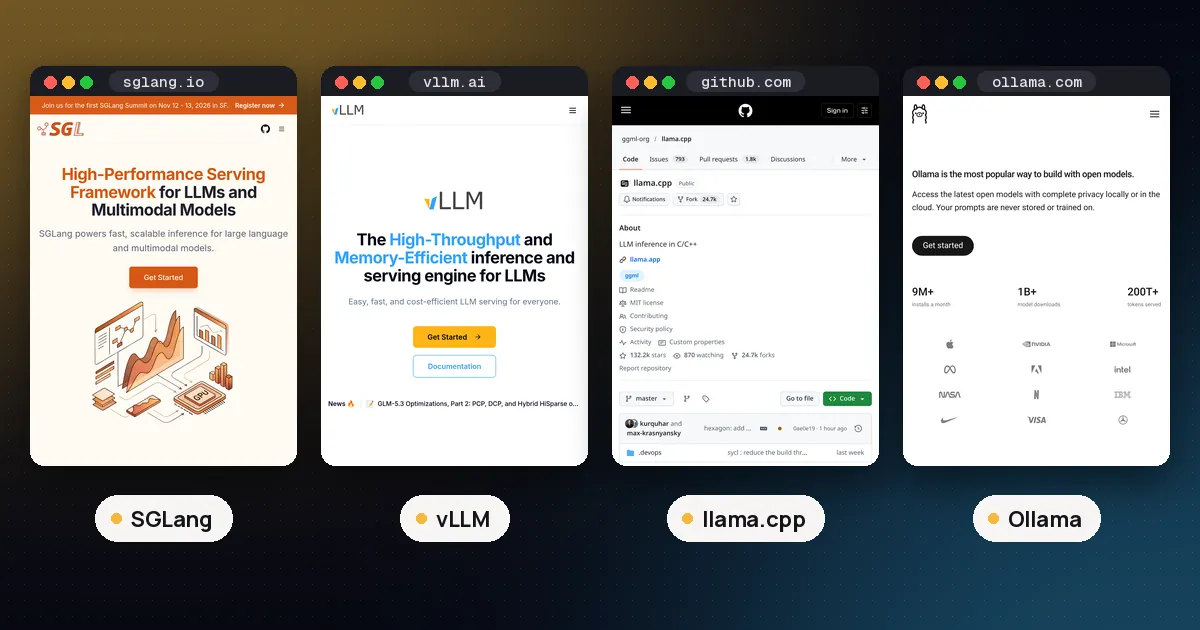
SGLang vs vLLM on DGX Spark: Which to Use?
SGLang vs vLLM on DGX Spark compared on setup, memory, NVFP4 models, speed and clustering, so you can pick the right server for your GB10 desktop.
8 min readListen
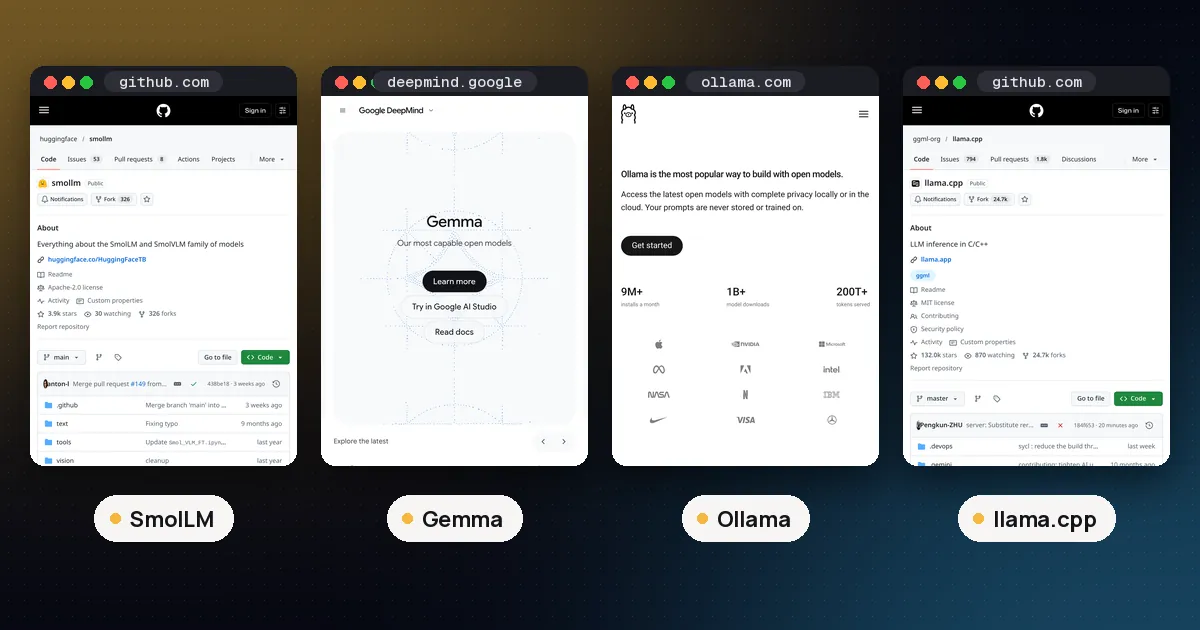
SmolLM vs Gemma: Which Small Model to Use?
SmolLM vs Gemma compared on size, licence, context, languages, vision and audio, local setup and fine tuning, so you can pick the right small model in 2026.
9 min readListen
Tinygrad vs PyTorch Performance
Tinygrad vs PyTorch performance: when TinyJit and BEAM can outrun eager PyTorch, when torch.compile and the ecosystem win, and how to compare them fairly.
7 min readListen
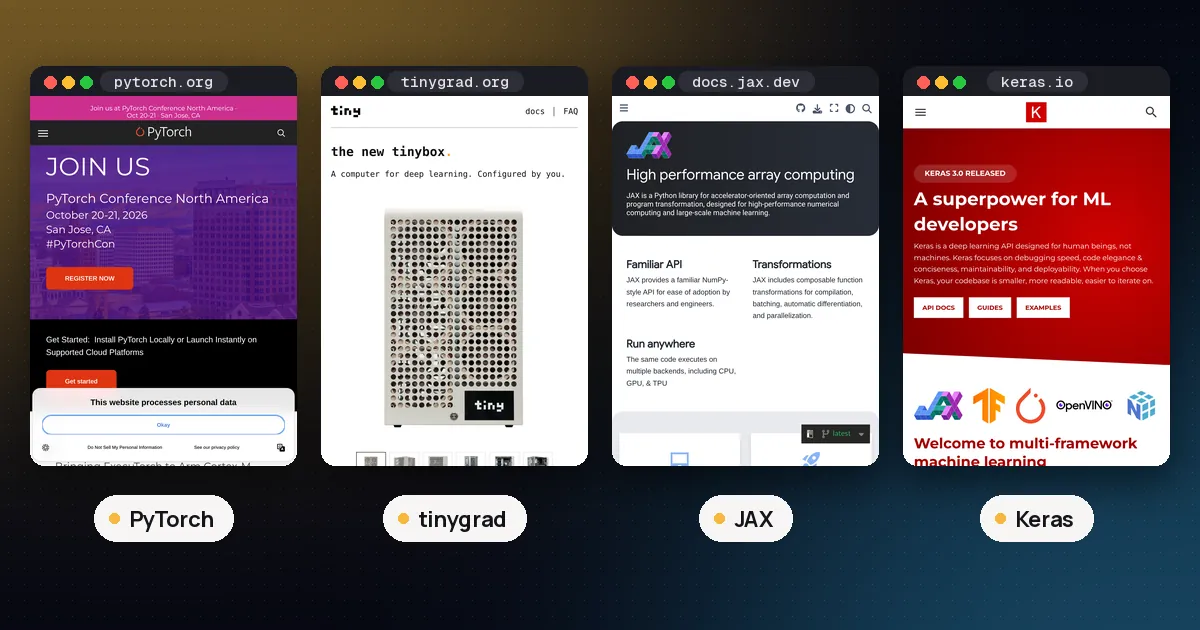
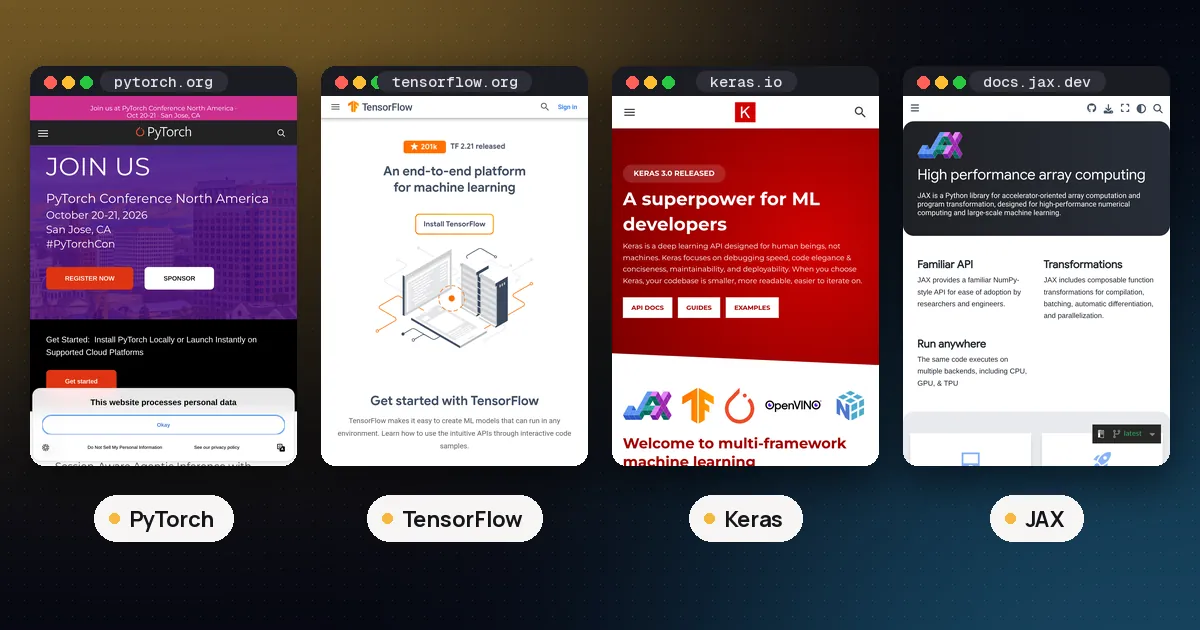
TensorFlow vs PyTorch vs Keras in 2026
TensorFlow vs PyTorch vs Keras in 2026: Keras 3 multibackend, which is easier to learn, open weight LLM ecosystem fit, and who should pick each stack.
· updated
10 min readListen
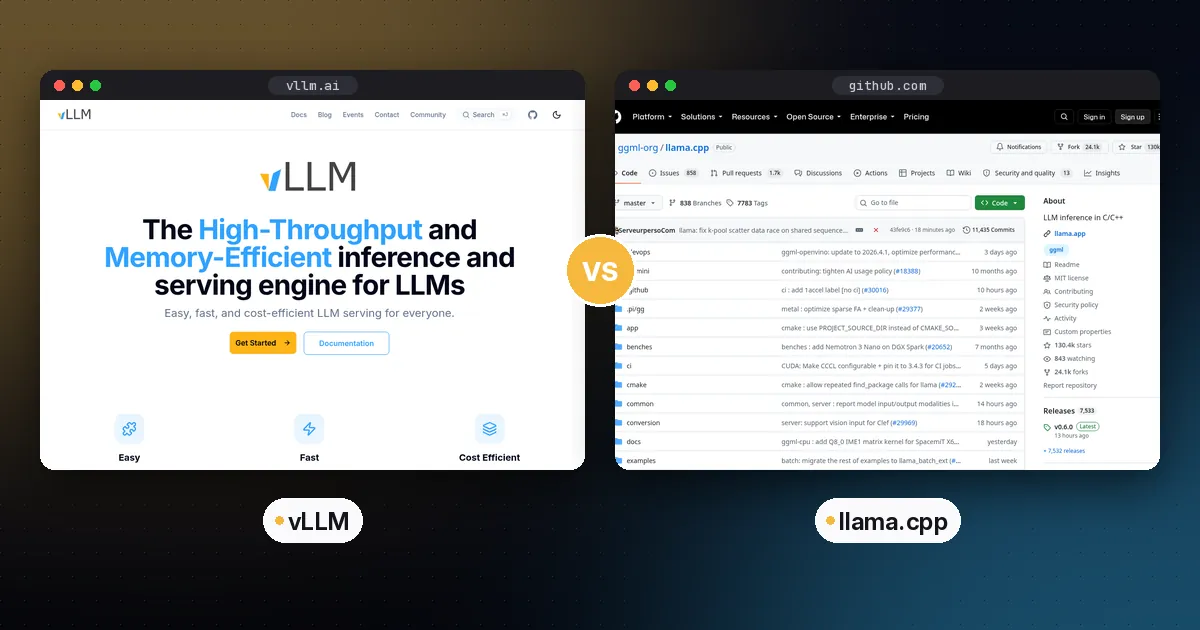
vLLM vs llama.cpp vs SGLang: Which Should You Use?
vLLM vs llama.cpp vs SGLang in 2026: speed and benchmarks, what vLLM 0.34 changed, how RadixAttention works, hardware, ports and which inference engine to pick.
· updated
9 min readListen
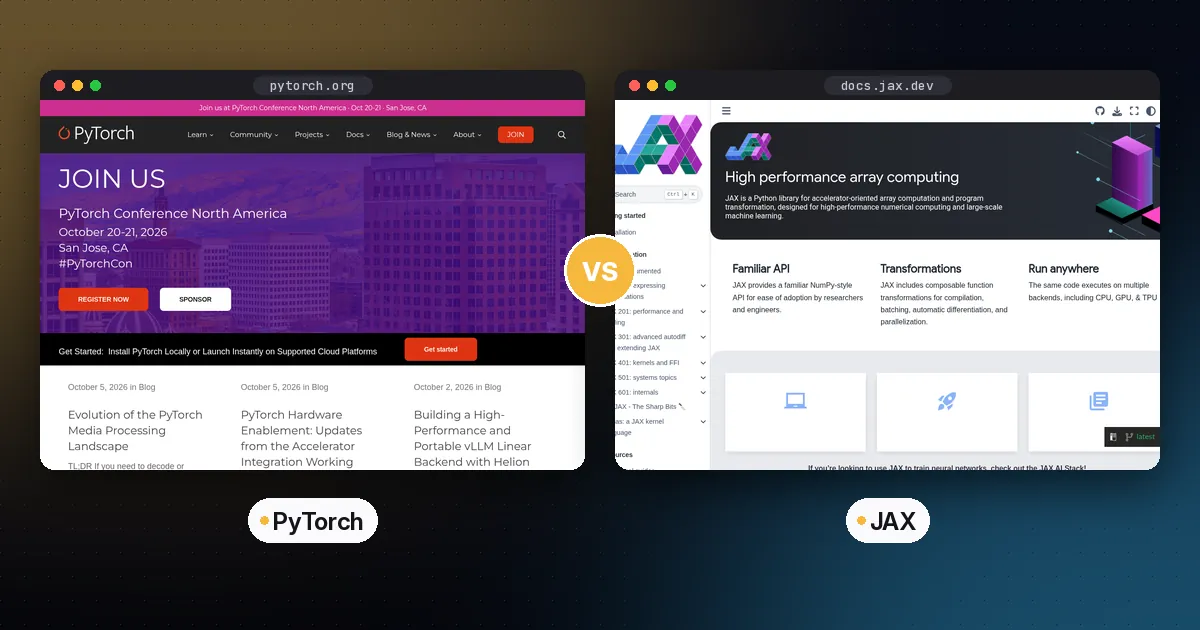
PyTorch vs JAX in 2026: Speed, TPUs and Which to Learn
PyTorch vs JAX in 2026: our CPU speed test, eager vs compiled code, TPU support now that TorchTPU replaces PyTorch/XLA, the LLM ecosystem, and which to learn first.
· updated
10 min readListen
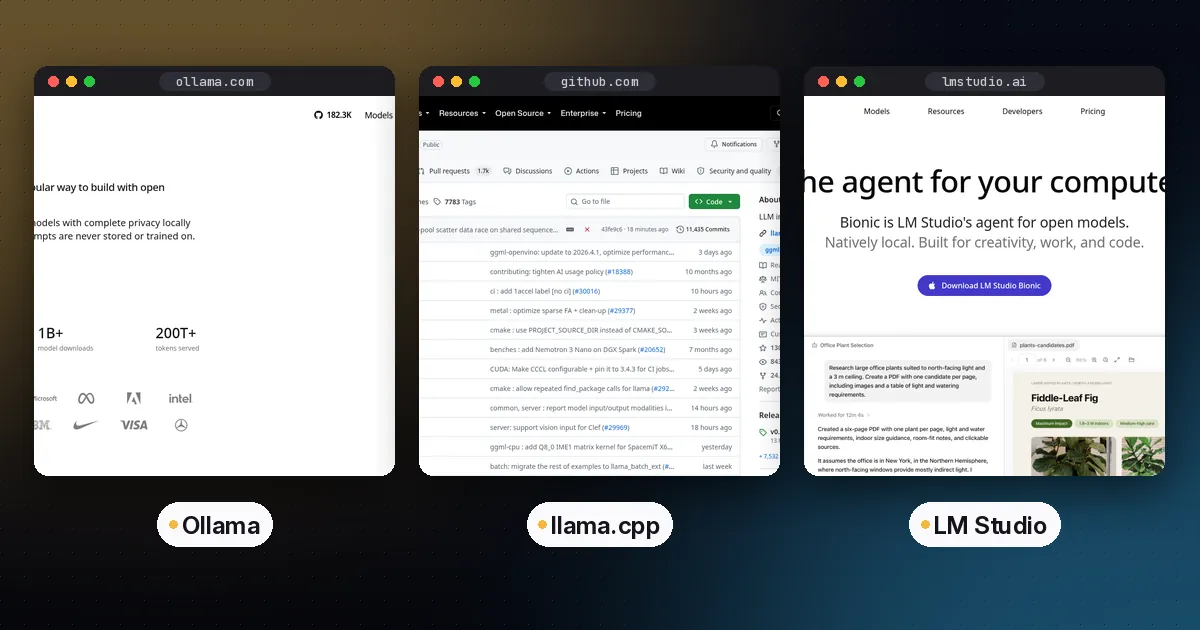
Ollama vs llama.cpp vs LM Studio: Which to Use?
Ollama vs llama.cpp vs LM Studio in 2026, with our speed test on the same GGUF file, ports, licenses, Mac support, the context trap and which runner to pick.
· updated
10 min readListen
MLX vs GGUF on Mac: Speed, Quality and Which to Use
MLX vs GGUF on Mac: MLX is often faster at generation on Apple Silicon, GGUF has more quants and runs anywhere. How to test both and which one to pick.
· updated
9 min readListen
Neuronpedia Guide: TransformerLens vs nnsight
Neuronpedia explained (SAE features, Jacobian Lens, circuit tracer, API) and TransformerLens vs nnsight compared: TransformerLens 4, nnsight 0.8 and NDIF.
· updated