An open weight model leaderboard ranks AI models whose weights you can download and run yourself. Two public boards matter most right now. On the Artificial Analysis open weights page, checked October 28, 2026, DeepSeek V4.1 Flash 1017 (Max) and GLM 5.3 (Max) tie at the top with an Intelligence Index of 32. On the LMArena Text leaderboard, dated October 27, 2026, the highest open licence models are GLM 5.3 (Max) at 1481 and MiMo V2.6 Pro at 1480. The two boards measure different things, so read them side by side rather than adding their numbers together.
This guide copies scores only from those named pages, with the date beside each figure. It does not build a combined ranking, because averaging an index of automated tests with a human preference rating produces a number that means nothing. For what each underlying benchmark measures in depth, see the leaderboard explainers on TrueIQ. This page is about the next step: picking an open model you can actually download, serve and fine tune.
What counts as open weight
Artificial Analysis states its rule plainly: models count as open "where their weights are accessible to download," which allows self hosting and customising, such as fine tuning. Open weight is not the same as open source. Most of these releases share weights but not training data or full training code, and licences range from MIT and Apache 2.0 to custom community licences with conditions. Our guide on open weight vs open source explains the difference and why it matters for commercial use.
Leaderboards also label licences differently. Step 5 Preview from StepFun carries a Hugging Face weights icon on Artificial Analysis, yet LMArena lists it as Proprietary. Kimi K3 (Max) appears on LMArena under a "Kimi K3 license." Always open the model card on the Hugging Face Hub and read the licence yourself before you rely on a leaderboard label.
Leaderboard 1: Artificial Analysis open weights
Artificial Analysis runs its own evaluations on every model it lists and publishes an Intelligence Index. Version 5.0 combines nine evaluations: AA Briefcase v1.1, AutomationBench AA, Terminal Bench 4.0, FrontierCode 2.0, AA Omniscience v1.1, GDP.pdf, HLE Diamond, CritPt v2 (Hard Subset) and Terminal Bench Science 0.1. Most of these are agentic or professional tasks, so the index rewards models that can plan, use tools and work through long problems.
The page also lists total and active parameters, context window, a blended price per million tokens from API providers and output speed. Here is the table as shown on October 28, 2026.
| Model | Creator | Intelligence Index | Parameters (active) | Context |
|---|---|---|---|---|
| DeepSeek V4.1 Flash 1017 (Max) | DeepSeek | 32 | 552B (16B) | 1M |
| GLM 5.3 (Max) | Z AI | 32 | 753B (40B) | 1M |
| MiMo V2.6 Pro | Xiaomi | 30 | 1.0T (42B) | 1M |
| Ling 3.1 Flash 1019 | InclusionAI | 29 | 560B (25B) | 1M |
| MiniMax M3.1 Flash | MiniMax | 29 | 428B (23B) | 1M |
| Step 5 Preview | StepFun | 29 | 600B (27B) | 1M |
| Muse Spark Open (Xhigh) | Meta | 25 | 816B (42B) | 1M |
| Qwen3.8 27B (Xhigh) | Alibaba | 20 | 27B (dense) | 256k |
| K2 Horizon 375B A23B | Institute of Foundation Models | 18 | 375B (23B) | 524k |
| Beam 1.0 | Reflection | 18 | 501B (23B) | 1M |
| Nemotron 3.5 Super VL | NVIDIA | 14 | 120B (12B) | 1M |
| Inkling (Xhigh) | Thinking Machines | 12 | 975B (41B) | 1M |
How to read it. The index is a single number, so small gaps are not meaningful on their own. A tie at 32 means the two models did about equally well across those nine tasks, not that they behave the same. Labels such as (Max) or (Xhigh) name the reasoning effort setting that was tested. The same model at a lower effort setting will usually score lower and answer faster, so match the setting to how you plan to run it.
Notice the parameter column. Almost every model at the top is a mixture of experts design with hundreds of billions of total parameters and only 12B to 42B active per token. Active parameters drive speed, but total parameters decide memory. A 552B model still needs all of its weights loaded. Qwen3.8 27B is the only dense model in this list, and the only one that fits on a single consumer GPU once quantized. Our VRAM guide shows how to estimate the memory for each size.
Leaderboard 2: LMArena Text Arena
LMArena ranks models by human preference. Visitors type a prompt, see two anonymous answers and vote for the better one. Votes are turned into a rating, shown with a confidence interval. On October 27, 2026 the Text Arena listed 419 models from 9,003,272 votes, open and closed together.
The table below lists the open licence models that rank highest on the overall board, with their overall rank, as shown on October 27, 2026. Kimi K3 (Max) placed higher, at rank 19 with 1488, but its custom licence is not a standard open licence, so check its terms first.
| Overall rank | Model | Licence shown | Score | Votes |
|---|---|---|---|---|
| 28 | GLM 5.3 (Max) | MIT | 1481 (±5) | 26,606 |
| 29 | MiMo V2.6 Pro | MIT | 1480 (±9) | 4,037 |
| 33 | GLM 5.3 Flash | MIT | 1477 (±5) | 41,642 |
| 35 | DeepSeek V4.1 Flash 20260910 (Max) | MIT | 1476 (±6) | 13,657 |
| 38 | GLM 5.2 (Max) | MIT | 1475 (±4) | 53,702 |
| 60 | Kimi K2.6 | Modified MIT | 1461 (±4) | 39,978 |
| 75 | Hy3 | Apache 2.0 | 1454 (±6) | 13,840 |
| 77 | Gemma 4 31B | Apache 2.0 | 1452 (±7) | 6,138 |
| 106 | Qwen3.8 27B | Apache 2.0 | 1436 (±5) | 27,779 |
| 219 | gpt oss 120b | Apache 2.0 | 1352 (±4) | 30,200 |
How to read it. The plus or minus figure matters more than the rank. LMArena also shows a rank spread: GLM 5.3 (Max) could sit anywhere from 17th to 45th, and MiMo V2.6 Pro from 13th to 52nd. Models whose intervals overlap are statistically close. A low vote count, like the 4,037 votes behind MiMo V2.6 Pro, means a wider interval and a less settled position. Ratings flagged Preliminary are newer still.
Arena scores reflect what people prefer in a chat window: helpful tone, formatting and length all play a part. That makes the board a good guide for assistant style use and a weaker guide for agent work or narrow tasks. It also scores the version the lab or a provider serves, not a quantized file running on your laptop.
Why the two boards disagree
Put the tables together and the order shifts. GLM 5.3 (Max) is near the top of both. Muse Spark Open scores 25 on Artificial Analysis, and our Muse Spark Open guide covers running it. Step 5 Preview scores 29 on the index but sits at rank 82 on LMArena with 1448, under a Proprietary label there. Gemma 4 31B does not appear in the Artificial Analysis open weights table shown today, yet it holds 1452 on LMArena.
None of this means one board is wrong. Artificial Analysis tests agentic and expert tasks with fixed scoring. LMArena measures which answer people liked. A model tuned for long tool loops can lose chat votes, and a pleasant chat model can stumble on Terminal Bench. Choose the board that resembles your workload, then test the shortlist yourself.
From leaderboard to your own machine
The top of both boards is dominated by models far too large for a desktop. Here is how to turn a leaderboard into a practical choice.
- Set a memory budget first. A single 24 GB GPU or a 32 GB Mac caps you at roughly the 27B to 32B dense class once quantized. Read how much VRAM an LLM needs and GGUF quantization explained.
- Filter the boards by size. Artificial Analysis lets you view small and medium models separately. Within the tables above, Qwen3.8 27B and Gemma 4 31B are the realistic local picks; see run Qwen 3.8 locally and run Gemma 4 locally.
- Check the licence. Prefer MIT or Apache 2.0 if you ship a product. Custom licences can restrict use.
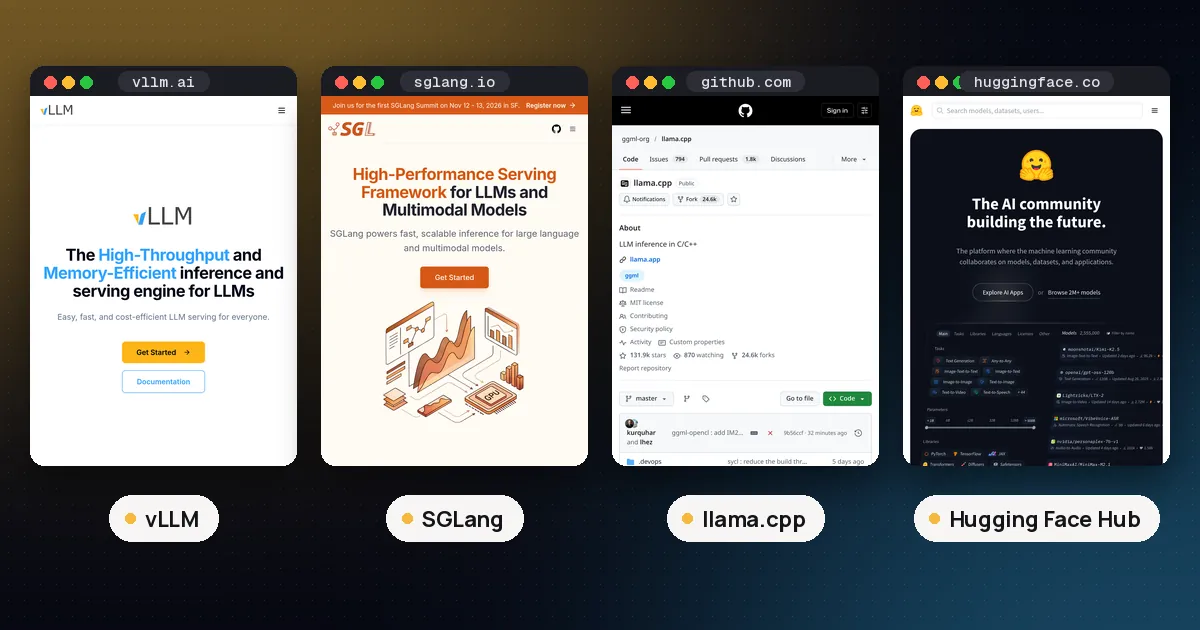
- Pick a runtime. For one user, Ollama or llama.cpp. For many users on data centre GPUs, vLLM or SGLang; compare them in vLLM vs llama.cpp vs SGLang.
- Run your own test. Twenty prompts from your real work will tell you more than a rank gap of five places.
Large mixture of experts models such as DeepSeek V4.1 Flash can run on serious multi GPU rigs or high memory Macs, and our best open source models to run locally guide keeps a hardware based shortlist.
How often these boards change
Both pages update several times a week. Artificial Analysis marks evaluations as New or Updated, and the index version itself changes; scores from Intelligence Index v4 are not comparable with v5.0. LMArena dates each snapshot and adds new models with Preliminary ratings that can move quickly as votes arrive. Treat any figure older than a few weeks, including the ones on this page, as a starting point and check the live board.
FAQ
What is the best open weight model right now?
It depends on the board. On Artificial Analysis, checked October 28, 2026, DeepSeek V4.1 Flash 1017 (Max) and GLM 5.3 (Max) tie at 32. On LMArena Text, dated October 27, 2026, GLM 5.3 (Max) is the highest model with an MIT licence at 1481. Neither runs on a single consumer GPU.
Is there an official open source LLM leaderboard?
No single board is official. Artificial Analysis has a dedicated open weights page, and LMArena lets you filter by licence. Each uses its own method, so name the board whenever you quote a rank.
Can I average the Artificial Analysis and LMArena scores?
No. One is an index of automated task results on a 0 to 100 style scale and the other is a preference rating around 1,000 to 1,500. They measure different things, and an average hides both.
Which open weight model is best for a single GPU?
Among the models in today's tables, Qwen3.8 27B (Apache 2.0) and Gemma 4 31B (Apache 2.0) are the dense models that fit one 24 GB card when quantized. Test both on your own prompts.
Do leaderboard scores apply to quantized models?
Not directly. Boards test the full precision or provider served version. Quantizing to 4 bits usually costs some quality, so check results with your own quantized file.
Why does one model show different licences on different boards?
Each site labels licences its own way, and some releases change terms after launch. The model card on Hugging Face is the source to trust.
Sources
- Artificial Analysis: Comparison of Open Source Models, checked October 28, 2026
- LMArena Text Arena leaderboard, snapshot dated October 27, 2026, checked October 28, 2026
- Artificial Analysis home, for index methodology links